In many parts of the English-speaking world, Christianity is known for not valuing dreams. The fear is diffuse, the stuff of legends, vaguely suggesting that paying attention to dreams is somehow pagan or consorting with the devil. In the past, however, Christianity considered dreams to be a viable way to receive visions from God, as well as prophesies. So why is dreaming so disparaged today?
In my essay on lucid dreaming history, I reported that, in the Middle Ages, Thomas Acquinas played a role in the transformation from a dream-loving Christendom to dream-fearing one. However, I attended a lecture last month by religion scholar Bart Koet who added another layer to this unfortunate transformation.
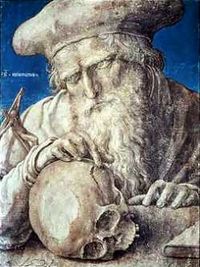
Koet argues that one person is not to blame for the shifting attitudes of Christian priests away from dreams as a source of knowledge. Specifically, Koen addressed the assumption with many Christian historians that Saint Jerome is an even earlier naysayer of dreams.
Who is St. Jerome? He’s the guy who translated the Bible directly from Hebrew to Latin back in the 3rd century. Apparently a very influential Christian historian, M.T. Kelsey, is the 20th century source that blames St. Jerome for mis-translating certain Hebrew words that has led to the growing mistrust of dream experiences. Specifically, the claim is that Jerome mis-translated a prohibition against “practicing augury and witchcraft” into a prohibition against “observing dreams.”
Because Jerome’s translation became the official Vulgate for the Catholic Church, dreams were avoided ever since by religious authorities. However, Koet suggests that Kelsey amplified Jerome’s mistrust in dreams – after all, Jerome devoted himself to God after his own dream vision! He also writes about this dream extensively in his letters, which includes a harrowing underworldy journey and interrogation by a unknown Judge.
Rather, St. Jerome may have admonished against seeing pagan dream interpreters, or even admonished against interpreting “your own” dreams without a proper Christian interpreter. In either case, St. Jerome was one of many Christian scholars who distinguished between kinds of dreams, which can include visions from on high, as well as temptations “from down low.”
Other early Christian figures who discuss the importance of paying attention to dreams include Irenaeus, Clement of Alexanderia, Origen, the martyr Perpetua and Constantine himself.