Lucid Dreaming and Narby’s Cosmic Serpent
April 24, 2008 by Ryan Hurd
Filed under Dreamy Book Reviews
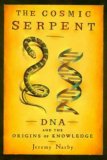
I’ve been re-reading the Cosmic Serpent by Jeremy Narby. A highly recommended narrative about an anthropologist’s journey into the realm of ayahuasca cultures in Amazonia. It blew me away and the second reading is just as good.
Narby is an ethnobotanist, and he makes the key observation that, while Western scientists have freely picked from the fruits of indigenous plant knowledge, these same scientists do not believe the indigenous claim about how they received their staggering encyclopedic understanding of the most diverse ecosystem in the world.
The Dark Side of Shamanic Tourism
March 31, 2008 by Ryan Hurd
Filed under Consciousness & Health
This is the Anthropology of Consciousness Review – Part III.
Shamanic tourism is gaining popularity every year. This segment of the ecotourism industry serves First Worlders who want to experience entheogens in a somewhat Indigenous context.
Anthropology of Conscience
November 8, 2007 by Ryan Hurd
Filed under Consciousness & Health
The American Anthropological Association just drafted a statement against the US military’s Human Terrain System project. The HTS hires anthropologists to consult with military ground units to better understand the foreign cultures where they are stationed. So they can dispose of them more efficiently.
While I am being slightly tongue-in-cheek, I agree with the AAA’s position that mixing professional anthropologists into combat operations is not congruent with the profession’s core values. It also endangers field anthropologists who, you know, happen to not be spies. People like me.
Anthropology of Consciousness Wants You
October 4, 2007 by Ryan Hurd
Filed under Consciousness & Health
THE SOCIETY FOR THE ANTHROPOLOGY OF CONSCIOUSNESS
Spring 2008 Annual Meeting and Conference
March 19-23, 2008 ” Yale University
CALL FOR PAPERS
Theme: Consciousness and Spirit
For all its material correlates and consequences, the anthropology of consciousness incorrigibly connotes an aspect or dimension that is immaterial, yet somehow integral to that which is at the most intimate core of the personal”that which bursts forth in life and vanishes in death, leaving behind a useless husk. Cultures in every age and place have called it spirit, placed it at the center of their worldviews and religions, and sought to grasp its ephemeral essence. Even our materially oriented culture reaches out for the spiritual, however defined.
How does something/someone called spirit impinge on consciousness, lifting it from myriad electrochemical processes into the richness and depth we experience in the world, in others, in ourselves? What is it: will o” the wisp or Pentecostal flame? A metaphor standing in for a bundle of meanings, a component of obsolete dualism, or an emergent property of material processes? A divine presence mixed into physicality”the indestructible lan vital that incarnates (and perhaps reincarnates) to transform dead matter into beings who experience joy, suffering, desire, and mortality? How has it been understood across time and cultures, and how can it be understood in the new century?


Twitter
Facebook