Except for Dr Freud, no one has influenced modern dream studies more than Carl Jung.
A psychoanalyst based in Zurich, Switzerland, Jung (1875 -1961) was a friend and follower of Freud but soon developed his own ideas about how dreams are formed. While depth psychology has fallen out of favor in neuroscience, Jung’s ideas are still thriving in contemporary psychoanalytic circles. Popular applications directly based on Jung’s research include the Myers-Briggs Personality Type Indicator, the polygraph (lie detector) test, and 12-step addiction recovery programs.
The basic idea behind Jungian dream theory is that dreams reveal more than they conceal. They are a natural expression of our imagination and use the most straightforward language at our disposal: mythic narratives. Because Jung rejected Freud’s theory of dream interpretation that dreams are designed to be secretive, he also did not believe dream formation is a product of discharging our tabooed sexual impulses.
And surprisingly enough, Jung did not believe that dreams need to be interpreted for them to perform their function. Instead, he suggested that dreams are doing the work of integrating our conscious and unconscious lives; he called this the process of individuation. It’s easiest to think of individuation as the mind’s quest for wholeness, or that quality of applied wisdom that separates elders from grumpy old men. While not required, working with dreams and amplifying the mythic components can hasten along the process.
Archetypal Images Bring Balance
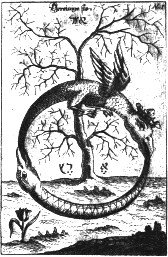
This mythic world of Jung’s is the realm of the archetypes, which are the universal energies of every human who is not only in conflict with society but also with him or her self. Jung suggested that the archetypal images that come through dreams may be derived from different organs and thought centers in the body, and as such represent evolutionary drives.
Despite all the conflict, order is where it’s all headed from Jung’s perspective. The quicker we can balance all these ancient needs, the more productively we can live. The psychotherapist’s role is to provide hope for this order by helping the client make sense of their night visions and how they relate to waking life.
In Jung’s reckoning, the psychotherapist is like a modern shaman or priest who helps the individual create a personal mythology that works by throwing out maladaptive patterns and establishing healthy ones in their place.
The Collective Unconscious is not a Psychic Soup
The components of our mythic lives all have a similar structure throughout the lifespan. This is Jung’s collective unconscious, an idea that is usually misrepresented in popular culture today as some kind of psychic reservoir of knowledge. Jung was pointing more towards the psychological constants in all societies, such as rites-of-passage into womanhood, or the growing fascination with death after middle age.
The confusion over the collective unconscious might have to do with the fact that Jung believed in telepathy. Ever the empirical scientist, Jung wrote “I would not assert the law behind them [telepathy] is “supernatural”, but merely something which we cannot get at yet with our present knowledge” (1974, p. 48).
If you are interested in how dreams can reflect the Big Moments in our lives, as well as our natural aptitude for mysticism, then start with Jung’s Dreams, Myths and Reflections, his autobiography. It is rich and provocative.
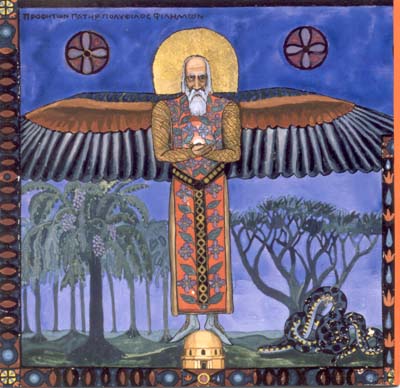
Jung’s dream journal has also just been published for the first time, in limited numbers. Known as the Red Book, this is the journal that Jung kept during his “encounter with the unconscious” during WWI, in which he holed up in his studio and purposefully went crazy for a while. He claimed later that all the seeds for his major ideas are represented in the Red Book, which is full of ornate drawings and calligraphy. This book may prove to rewrite everything we thought we knew about Carl Jung.
Next, we’ll look at the work of Calvin Hall, creator of the first cognitive theory of dreams.
Further Reading:
Memories, Dreams and Reflections by Carl Jung
Dreams by Carl Jung
What a magnificent post on Carl Jung, Ryan! I’ve been trying to find some good blogs that talk about stuff in psychology and I’m just glad to come across your website. It’s funny how your article presented itself to me because I just had a dream a few hours ago and it gave me quite a strong impression. Synchronicity, perhaps. Yeah, Jung is probably telling me something.
[[ Ever the empirical scientist, Jung wrote “I would not assert the law behind them [telepathy] is “supernatural”, but merely something which we cannot get at yet with our present knowledge” ]] – I don’t know what’s wrong with using the word supernatural. It’s just a word. However, it’s quite understandable because his contemporaries might think he’s crazy. Anyway, I think if scientists can integrate WiFi technology into the human brain, that would make Jung a happy spirit. We just have to wait and see what happens in a few years. Thanks for the nice article. Peace and respect – Ryhen
I second Rhyen’s comment about synchronicity! I happen to be doing a schoolwork module right now about Jung’s perspectives on dreams. It was startling to find the email pointing to this article in my inbox today! It’s so cool when these things work out that way.
Thanks for the posting, Ryan. I love Jung’s work on dreams and archetypes, and I have kept a dream journal for many years. I remember dreaming once that I was pregnant with a child, so much did I want one! That same year, my son, Liam, was born.
Synchrony or Divine intervention, I wonder?
Thanks again!
Love and Light,
Hugh
Thanks for the link to the news about the new Red Book.
Jung is interesting also because of his explorations into Islamological areas.
I have corresponded with a Qur`aan translator, sensitive to the place of dreams in the lives of Muslims, about the Jungian analysis of the dreams of a Middle-Eastern Muslim in
http://www.jungnewyork.com/islamic.shtml.
He and others disagree about Adams’ decoding of the Muslim/Middle-Eastern “submission complex”.
The dream accounts in the article are, however, quite fascinating to read.
thanks everyone for coming by.
Rhyen, you’re right it’s just a word, but being called “supernatural” is the worst thing you can say to a researcher. Even parapsychologists reiterate that what they study isn’t evidence of the “supernatural”. I write more about this in this article about radical materialism.
great to hear about synchronicities: I’ve found that the more I study dreams, the more often I experience them.
And thanks Muhammad for the Islamic info.
Interesting post, Ryan. I often wonder if Jung felt the collective unconscious was even greater and more complex — but he just didn’t want to go that far. Montague Ullman and Stanley Krippner’s work on Dream Telepathy provide a scientific basis for investigating this more deeply. On lucidipedia.com, I’m leading an experiment on dream telepathy, since I feel it may be the mechanism to explain mutual dreaming, and mutual lucid dreaming. Thanks again.
I stumbled upon this site to gain insight how the rest of the world dealt with the dream world. I am a STRONG dreamer and keep a journal. I also walk “The Red Road” Native American Culture and faith. While I have been devloping a SELF METHOD of understanding my dreams, portions of my dreams peek my intrest. From old native teachings I have learned to observe, and control my hands.. have any of you thought of studying the dream world from a Native Americans point of view from the ancient teachings?
hi Melissa,
thanks for commenting! I have a profound respect for the Native American teachings of dreams. Barbara Tedlock is one of my favorite authors on the subject, as well as Lee Irwin. in general, I believe the study of shamanism in general is crucial to dreams. Indigenous traditions have some of the oldest and most effective methods of dreamwork available today. Because of my background in anthropology, I am interested in preserving these knowledge bases, and at the same time make sure that we don’t culturally appropriate them.
May I extend an invitation to those interested in Dr. Jung’s work to join the Carl Jung Depth Psychology Facebook Group.
https://www.facebook.com/groups/56536297291/
Thank you
Great article on Jung, Ryan. I myself have just received a copy of The Red Book (Liber Novus) from my local library (of course they didn’t tell me when I reserved it how HUGE the damn thing is), and I am beginning to delve into it with salivating interest. The Book of Days type drawings… the calligraphy looking like it was done by the able hand of a cloistered monk… the German! Oh, if only I paid more attention to my German class in high school instead of squeezing in a nap during a showing of ‘Findet Nemo’… Thank the lord it’s translated, because this tome is going to be studied and revered like its my own little dream-time bible until its due date; at which point I’m probably going to renew the holy Bejeezus out of it. Sorry, fellas in the Snoqualmie Library District! I’m holding onto this sucker for as long as I can.