
This is the third article in a series covering arguments against lucid dreaming. The fear that lucid dreaming is somehow unholy or spiritually corrupt is voiced in conservative religious circles as well as new age spiritual communities. In all of these groups, the fear is that lucidity allows contact with undesirable, unsavory or otherwise harmful forces.
As it turns out, these fears may have a basis in a neurological reality: some of us are prone to dip into the dark side of lucid dreaming, including contact with aggressive drives and powerful experiences of sexuality.
But the truth is not black or white, good or evil.
Lucidity, Sex and Sin
For dream-fearing Christians, the concern of lucid dreaming focuses on demons and sin. A quick review of the role of dreams in early Christianity shows that dreams actually played a major role in the early church. Interestingly enough, many of the scholars who helped popularize lucidity are Christian.
For certain new-agers, the dirty dream is viewed as a reflection of an unhealthy attachment to desire. Moving towards emotions and sexuality on purpose in your dreams is a step towards ignorance.
The monkey mind.
Transpersonalist Ken Wilber has even opined that dreams can “only” reach into the etheric realm, nowhere near the non-dual possibilities of “higher” states such as meditation.
What this viewpoint misses is the potential to work with emotions and sexuality in order to refine and channel these drives. Tantra is one example of sacred sexuality that can lead to higher states of awareness within the dream.
Sorcery, Satanism and Wicca
[pullquote]Lucid dreaming does not have an inherent value system: you provide that.[/pullquote]I see the reference to the fear of lucidity as a slippery slope to the dark side in Internet forums all the time.
There’s not any evidence behind it though.
This particular fear of lucidity is a hold-over from historic times, when women were actually burned at the stake for their lucid dreaming skills, along with their knowledge of herbalism and abortive aids.
What’s more, Wiccan lucid dreamers, who represent the remnant of this European shamanic tradition, are not concerned with doing evil, but with communing with the planet and healing themselves and others.

Granted, lucid dreamers can focus on anything they want. There are indeed some self-proclaimed lucid dreaming satanists who attempt to use the state to increase their power and say their spells.
Honestly, many more young people learn actual spells from Harry Potter. Neither are threats, simple because both camps will have new hobbies to irritate parents with in a month’s time.
Bottom-line: Lucid dreaming can be directed towards “sinful” activities, but many more people with religious and spiritual backgrounds use lucid dreaming as a reliable way to make contact with the more-than-human realm. The values of those traditions are reflected in the goals of lucid dreaming.
The neurology of base emotions
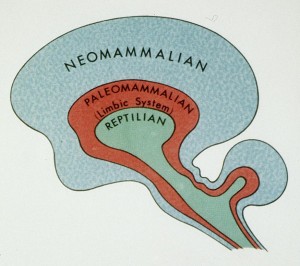
The fears of darkness in lucid dreams do have a grain of truth though. I’ve discussed this in earlier articles in this series, particularly the idea of dreaming as aggression.
To review, dreaming is a way of knowing in which negativity, fear, and intense sexuality mingle in challenging ways. The amygdala is highly active during REM sleep, the part of the brain that instigates flight or flight.
Meanwhile, the self tends to double and fragment in dreams as well, which is why some lucid dreams can involve confrontations with intelligent doppelgangers who know as much as you do about what is going to happen next.
This is the neurological set and setting of dreams. A little activation in the prefrontal cortex does not pull rank, nor does a strong desire to stay on the sunny side of street.
Temptation and Metanoia
Given this neurological base, these dreams are not necessarily sinful from a Christian perspective. Even Saint Augustine suggested that he was forgiven for his violent and sexual dreams. If you are Christian, the proper question to ask yourself is “am I encouraging and reveling in this material?” Lucid dreaming–like all conscious acts of imagination–reveal our wishes, and that can include temptations.
How you deal with temptation is a personal matter, but priests and mystics have been working with this material for centuries. In Christian mystical tradition, transforming base temptations into creative energy is an age-old process known as metanoia, which is about changing your mind’s habits and desires for the purpose of healing and personal growth. This work can be catalyzed within the lucid dream as well as in waking life fantasies.
However, a sexual or violent lucid dream is not a failure. It is still a dream. I would recommend taking responsibility for your intentions, but forgiving yourself for what happens in the dream itself.
When in doubt, give thanks
Expectation is still the single greatest influence on lucid dreaming outcomes–within this neurognostic framework, that is.
 By practicing gratitude, and having respect for your fellow dream figures, the ancestral dreaming mind begins to show its gifts. These are the keys we know well from all the great religions of the world: the practice of love, charity, and compassion.
When you’re scared, give thanks. Have compassion. Give a gift.
The doors to the mind that open next are worth all the trouble.
This article is drawn from Lucid Immersion, my mastermind guide on lucid dreaming.
First image credits 118/365 Meditate by Lisa Dragon.
You write so concisely and beautifully, thank you!
Nice article, Ryan! I just found a couple of interesting YouTube videos by a pro-lucid-dreaming Christian:
http://www.youtube.com/watch?v=pP3NzPeXHkU
http://www.youtube.com/watch?v=H5XZdv6chmk&feature=related
Hi Natalie! thanks for the kind words and stopping by.
and John, interesting stuff! I haven’t seen these before.
Seeing lucidity as a threat or danger is in my view a total misunderstanding of dreaming. A dream is reflection of your psychological or emotional state. How lucid you are is merely a indication of bio-available certain vitamins or nutrients are. Any fear or potential for corruption is merely the dreamers inability to understand or process what they’ve experienced.
thanks for the comment Chase. I agree that fear is generally about negative expectation. changing your set or attitude really makes a difference.
However, fear sometimes is a signal of something important going on under the surface of awareness. I don’t think fear should be abolished all the time, but respected as a signal for something deeper.
I enjoyed this exploration of religious based fears regarding Lucid Dreaming. If someone is a real purist about meditation, they can cultivate the ability to have Lucid Dreams in order to spend more of their dream time meditating. Certainly lots of individuals meditate within their Lucid Dreams. In the Buddhist tradition they say meditating within a Lucid Dream is even more profound and effective than meditation done while awake. Just one more option.
I am a lucid dreamer and also one that trusts that the Bible ALONE and in it’s entirety is the ONLY true and trustworthy message of God to mankind today. I think lucid dreaming is confined 100% to my own flesh, I do not at all expect ever to receive divine revelation via dreams nor would I accept it no matter how convincing a dream might be (thankfully I have not had to deal with that anyway!) Yet for all the above I am facinated with my God engineered wonder of my human brain including what is going on as I sleep. I believe that anyone thinking to be child of God should pray always to be kept away from the temptation of sin and to be delivered from all evil. I think if it is the desire of ones heart to dream of sexual encounters with other than ones spouse, then that is spirittual adultry according to Scripture. Bottom line is that we have a flesh that lusts after sin but if saved we have a brand new ressurected soul that God is pleased to equip with weapons and wisdom to gain victory over the flesh. For all I know lucid dreaming is one more arena for thGod to fight the good fight. We ought to receive it with thanksgiving and pray for grace even before sleeping. I look forward to chances to perhaps gain mastery over my flesh even in lucid dreaming. I have had very sinful sexual dreams (not lucid ) to which I awaken utterly dismayed at my brain’s utter disreguard for righteousness. But I reflect on what the apostle Paul wrote in Romans 9 I think about seeing a war in his members and pleading with God to remove his thorn in flesh (dreams??) but God said “My grace is sufficient” The sin in dreaming is really not the ressurected ME, it is my spiritually DEAD flesh in which there is no good and worthy thing ….it lusts to serve sin plain and simple. But I with my NEW heart seek to serve righteousness…so the war continues awake or asleep.
thanks for sharing your perspective Doug. You may be interested in my article on dreams in the history of Christianity, and especially about other modern Christians who also have powerful lucid dreams. http://dreamstudies.org/2009/10/08/lucid-dreaming-and-christianity/
I have been lucid dreaming for over forty years and only realized a few years ago that most people do not. What normally happens is that my logical mind seems to work even when I sleep and I “figure out” that I must be dreaming when some impossible thing occurs. I think I must have conjured up sexual dreams about five or six times in my lifetime. I suppose it is the best porn. Every sense is involved. Now, I am Christian and understand that an act could only have moral value if the free will is involved. A normal wet dream therefore could have no moral value. For all I know Christ himself, being fully man might have had them. It is a little difficult for me though. Normally when I am having a wet dream [I am single and chaste for the last few years], the dream becomes lucid and I feel obliged to stop. It is a bit frustrating.
Right, it’s frustrating! from a Christian perspective, that is precisely the nature of dealing with temptation… it cooks us. Lucid dreams seem to provoke sexuality from the get go. However I have found that sexual energy can be — with practice — focused towards other pursuits in the dream. Important to this process is knowing beforehand what your plan is (ie, a specific meditation, prayer, contemplation). This is the art of dream incubation, or as its called in lucid dreaming circles, the lucid intention.
I’ve been trying to lucid dream for four months for the sake of having fun (not in a sinful manner), and it has actually helped my lust go down drastically and my memory recollection and devotion to studies to rise drastically. I’ve only pulled off lucid dreaming once for a few minutes. As soon as I stopped trying it, my vices came back to haunt me. I believe it is not sinful, if not used for sin. It might actually help one resist temptation. I’ve also felt God speak to me while I was asleep (I did NOT try to contact him through a dream, he just knew my heart was troubled).
I formerly practiced lucid dreaming… until I realized the information was often unstable, partial, and suffered from inaccuracies.
Meanwhile, other dreams, received in the normal manner, contained spot-on details, even years and decades in advance.
Here is a more detailed explanation:
http://dreamtraining.blogspot.com/search?q=lucid
To develop the conversation, you might like to know that besides the run of the mill small town, big mouth preachers, there are actually ministers who cast out devils in addition to preaching Jesus. I have heard three of these men share stories about casting out demons that came into people through lucid dreaming.
While I quit seeking lucid dreaming experiences because I found natural dreams to be more valuable, I do believe the testimonies of those deliverance ministers, and I will not be involved in lucid dreaming again.
Peace.