It’s spooky season here, so let’s talk about werewolves. In my own lucid dream life, I sometimes shape-shift into other animals. I’ve transformed into birds many times, and I also spontaneously transform into a wolf or werewolf in my lucid dreams. Saying this in public gives me some trepidation, because this ability is misunderstood and tabooed in the modern era (and now it’s guaranteed I can’t ever run for public office). The transformation into a werewolf or other animal in dreams and other altered states, also known as therianthropy, has been noted for centuries. And the fear of animal transformation—and specifically werewolves, is just as old.
While animal transformation is a cross-cultural phenomenon described in the world’s ethnography, the Western mythology about werewolves developed and concretized in the Middle Ages. Although the validity of primary historic accounts have been dismissed for centuries as fanciful and fear-mongering attempts to manipulate village people, they are now widely viewed as Christian misperceptions about Celtic and Gaulish shamanism: skewed reports but with elements of truth.
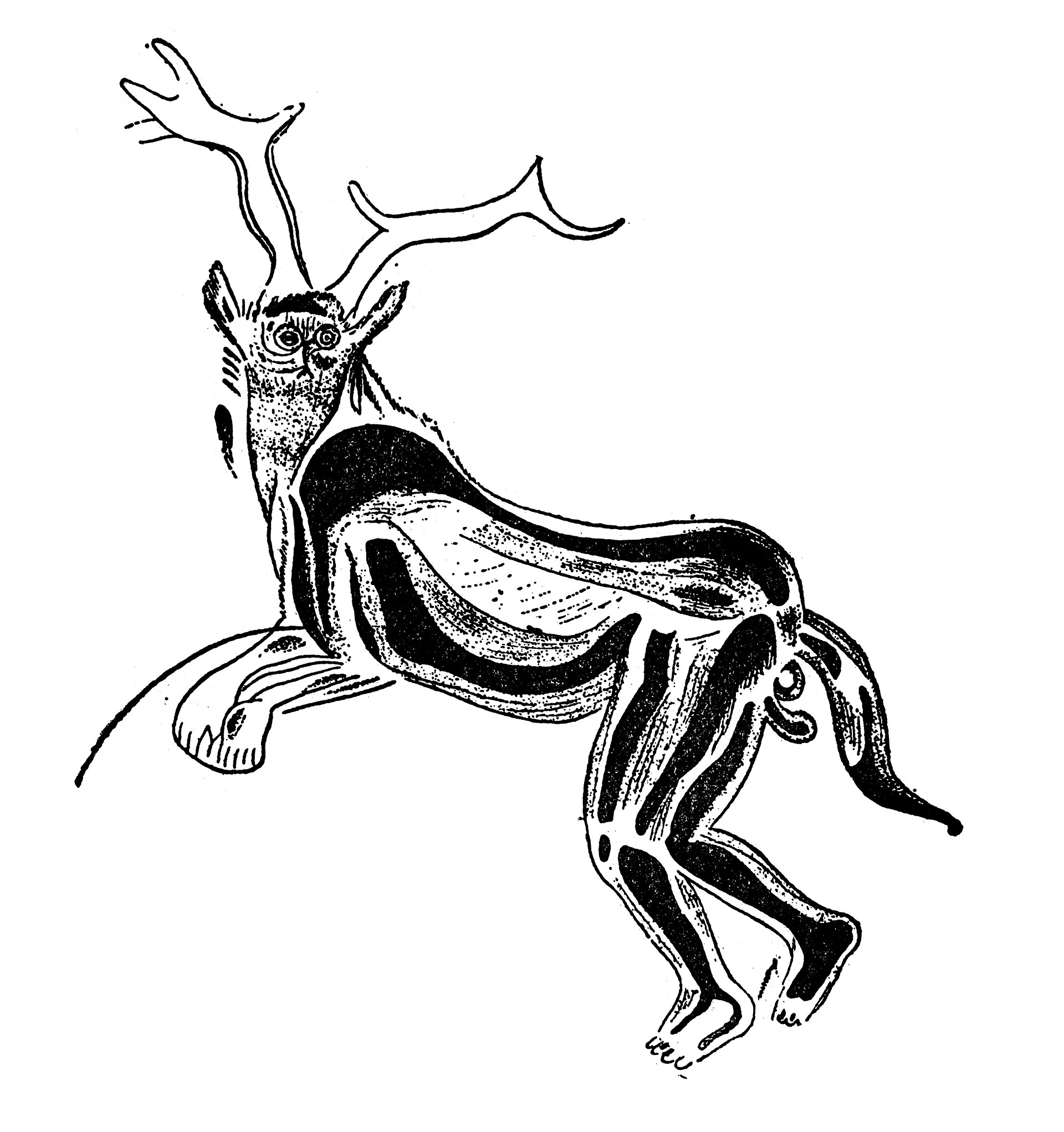
Let us also not forget, that half-animal, half-human figures are also a class of imagery seen in the some of the world’s oldest cave art, the Paleolithic pictographs of Spain, Germany and Germany.
In my dreams, when I transform into a wolf, my consciousness shifts. I am powerful. I am fast and strong and I have an awareness that is focused and determined. I am a hunter. When lucid, it’s an emotional lucidity: a sense of embodied affect that my human body cannot take, but my animal body can ride with it. This lucid emotionality is particularly in shadow in western culture; we’ve built so many layers of rationale that separate the idea of consciousness from our lived, embodied experience.
Animal transformation can be harrowing, because whenever we change our locus of self, we may feel out of control. But it can also be exhilarating.
In one of my earliest wolf transformation dreams,
For example, In a dream I had nearly 20 years ago, as a young man:
I wake up in my bed…. and realize “This is my childhood bedroom!” I do not want to be here. As soon as I become aware, I jump through the window — the room is one story up — and land in a small front yard of an apartment complex…. I start to run and notice how angry and sad I am. I run quickly and feel powerful in these emotions and then I feel a change — I’m running on all fours — “werewolf” I think. I don’t change all the way into a dog but I feel fur on my face and on my arms. … A man is walking his dog that goes bezerk trying to attack me. “Stay away!” I yell, “I’ll hurt him.”
Here’s what I wrote about this dream in my masters degree thesis:
The transformation of myself into a “werewolf” is directly related to the intense emotions rushing through me. I am incapable of expressing these emotions in my “childhood bedroom” so I defenestrate myself. Unable to express my anger indoors, I must go outside where I can vent, where I have room to run. Only in the streets does the emotional component make itself known as anger and sadness. So while leaving the room can be seen as an act of resistance, it also hastens an expression of intense emotionality. In this case, the intense emotionality can be seen as another psychological defense. “Stay away!” This mythological sense of self is monstrous and it is powerful.1
Lucid wolf transformation was the topic of a recent study published in the International Journal of Dream Research. I read this paper, admittedly, with a sense of unease, given my own experiences. Interestingly, several of the lucid dreamers reported what I have experienced in my own therianthropic visions.
First, theres’s the uncanny strength in their werewolf form:
“I recall how I felt huge, massive muscles that allowed me to push powerfully off the ground. I remember that the muscles felt so strong that running 40–60 km/h was not a problem at all.”
“I felt physical power (or some other type of power) in my body. I was much stronger and more agile than I used to be.”
And some subjects also reported an emotional aggression that came with their dreamed wolf bodies:
“I ran on all fours and felt the mood – wild, animalistic, aggressive.
“I felt aggression. I felt an ‘animal’ mood for a while; that was something wild and unpleasant….”
“I felt some kind of obsession and madness. There was an internal uncontrol-lable desire to rush at someone and tear him to pieces.”
And one dreamer summed up these two attributes together as:
“I don’t know how wolves feel in real life, but according to my feelings, it’s power and aggression and a complete absence of fear.”
What happens when the dream body transforms? We take on different containers for what we need to express. The most common psychological transformation associated with the werewolf in the west, be it in dream, vision, stupor or psychosis, is a reconnection to the animal drives and instincts usually repressed and kept under control by human civility. This includes violent urges, strong emotions, and unbridled sexuality. This takes some practice, and like most dreamwork, the adaptation is best seen over time in a thematic analysis.
On this point, historian Hans Duerr writes that animal transformation is a step towards a more ancient self:
“For whoever sees his other ego, has let go of his familiar one. You might say, his everyday personality has ‘died’, it dissolved in order to make room for another part of his self”2
We pride ourselves on being rational creatures living in a shiny modern world. Sadly we have become pinned down, as the inner conflict that comes with animal embodiment makes a mockery of both the natural drives of our bodies and the radical capability of our intellect.
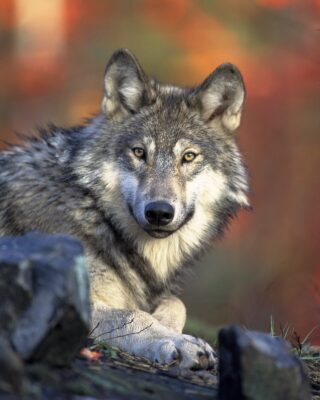
Barry Lopez, the influential biologist and wolf expert, once wrote that the werewolf holds a unique position in western consciousness. Condemned to slaughter their prey out of malice instead of need, but intelligent enough to know better, the werewolf is the human animal’s collective nightmare: the intelligent beast out of control.3
It goes deeper though.
The most influential historical source about werewolves was the Malleus Maleficarum, “The Witches’ Hammer,” a 15th century book that justified the burning of witches after (amongst other things) dreaming about transforming into wolves. A century later, the influential French writer Jean de Nynauld suggested that the Devil is responsible for inducing powerful dream experiences such as animal transformation. In the 20th century, historian Carlo Ginzburg has suggested that medieval practitioners incubated dreams to fly through the air and become other animals. Claude Lecouteaux linked animal transformation to the astral double. Another historical element of animal transformation is their association with Celtic/Gallic warriors known as Bezerkers, part of my own ancestral cultural heritage. These warriors were known for the fearlessness of the Roman sword, and fought without armor.
In this way, perhaps my dream transformation into the Berserker-style werewolf can be seen as an ancient and ancestral projection of this conflict?
Despite deep-seated cultural incentives to not mention dreams about therianthropy, werewolves and other human-hybrid creatures have been noted more recently in the powerful dreams of Carl Jung’s patients, as well as long-term meditators.4
Is it human nature that brings about this conflict, or rather is it a colonizing Western paradigm? After all, other cultures cultivate therianthropic practices in which shape-shifting is not necessarily associated with repression and violence, but, instead, interconnection with others, healing, the gathering of information, and powerful vitality. But still, even in these contexts, animal transformation can sometimes be used for sorcery. It’s not this or that—it’s both.
For example, Anthropologist Diana Riboli recounted in my 2014 lucid dreaming collection how the Batek peoples of Malaysia have long-standing traditions of animal transformation connected to dreams and out-of-body experience:
…during the night Batek halak [shaman] send their shadow-souls into tiger bodies and wander the forest in this guise. As soon as the shaman falls asleep, his shadow-soul abandons the human body and enters that of the tiger. At daybreak, the shadow-soul returns to the human body while the tiger goes to sleep in secret areas of the jungle. In general, the activities of the tiger-shamans are considered to be positive, as they play the role of defenders, protecting their companions from the attack of wild animals. But in some cases, the shamans are called to fight against other creatures. Moreover, if the tiger-shaman wandering in the jungle meets a hunter or falls into a trap, the destiny of his human body will be exactly the same of that of the tiger; the consequences can include serious injuries and even death. Despite the fact that my informants always tended to emphasize the positive actions of tiger-shamans, they also told me that—even if only on rare occasions—they can kill other beings in self-defense.5
That is sobering, is it not? This is why it took me years to teach lucid dreaming in a way that is safe(r). We want to treat ourselves respectfully, and set up a secure container when we do these practices: that is my lucid immersion protocol, and especially my work with prerequisites with lucidity, which you can now take as a gift mini-course.
The knowledge of how to shape-shift in lucid dreams is not gate-kept for some esoteric reason; it’s gate-kept because true transformations in consciousness come with some risk. To be clear: therianthropy is not dangerous if you have some common sense protections in place: a community of folks to share dreams with, and a mentor, spiritual director, or counselor on speed dial in case you trigger a deeper complex.
And, please, those who are called to explore this further, research how to establish good boundaries using practices of psychic self-defense. This is how witchcraft practitioners work with this phenomenon today: with support, with guardrails, and with care. It’s not a fun trick, however, or a “lucid challenge” to try on a whim on a boring weekend. It is a sacred and powerful incubation that brings about initiation by neurognostic design.
Animal transformation in lucid dreams can lead to fuller expression of your needs, desires, and also reveal the things that stand in the way of getting those needs met. With deep roots in history, mythology, and perhaps ancient shamanic capabilities, animal transformation is a rich topic that warrants continued—careful—exploration. Transforming into a bird or an owl or a hare or a wolf can take you far above what we know and can teach us about how to live in balance. We need this multiplicity, now more than ever.
Additional sources
1 Hurd, R. (2008). Unpublished thesis: Spontaneous Emergence, a phenomenology of lucid dreaming. Hosted here.
2 Duerr, H. (1985). Dreamtime: Concerning the boundary between wilderness and civilization. (F. Goodman, Trans.) Oxford: Basil Blackwell.
3 Lopez, B. (1978). Of wolves and men. New York: Scribner.
4 Jung, C. (1974). Dreams. Princeton: Princeton University Press; Hunt, H. (1989). The multiplicity of dreams. New Haven: Yale Press.
5. Riboli. D. (2014). Dreamed violence and shamanic transformation in indigenous Nepal and Malaysia. In Hurd and Bulkeley’s Lucid dreaming: New perspectives of consciousness in sleep. Bloomsbury, p. 83-84.
Leave a Reply