False awakenings are dreams that seem like waking life… until you get out of bed and fall down a bottomless chasm. True story. False awakenings can be frustrating, terrifying, and may even begin to impact your daily life, especially when they occur 5 or more times in a row.
The good news is that false awakenings can be managed with a few cognitive tricks and practices. FAs are basically pre-lucid dreams, as the dreamer is questioning reality. In many cases though, the dreamer actually cannot figure out if she is dreaming or not. Until the world is revealed to be an illusion!
It is our ability to think clearly in a false awakening that causes us to assume we’re awake. We’re not awake, we’re aware. So dealing with false awakenings necessitates a crash course in lucid dreaming.
Three Ways to Confirm You’re Dreaming
- If you doubt it, you’re dreaming. If you don’t know if you’re dreaming or not, especially after getting out of bed, you’re probably dreaming. Usually, we’re pretty good at discerning this kind of thing. So if you catch yourself wondering “Is this a dream?”, the answer is yes.
- Test your memory. Try to remember the address of your current location, or your cell phone number. If you can’t come up with these details, you’re probably dreaming. Long term memory activation in REM sleep makes these details hard to get to. Some people suggest doing a “reality check” in the dream by confirming that “everything is in order.” I find this unreliable. We often do not notice incongruities, and assume we’re awake when we are in a dream version of our bedroom. That’s how I fell down the bottomless chasm. Sometimes there are incongruities but sometimes not. The lucid dream world is just as real as waking life to the brain.
- The threshold test. This is a caveat to the reality check method. Often, walking through a threshold can break the spell of a false awakening because the next room will turn out not to be the bathroom or the hallway, but another bizarre room or a place from your past.
How to Wake up From a False Awakening
Many people are alarmed when they realize they are dreaming. This fear can bring on the manifestation of whatever we think is the scariest thing in the world. So it’s good to have some methods for waking up from the dream. This works for waking up from nightmares too when you realize you’re dreaming and want to get out.
1. Try opening and closing your eyes repeatedly …. eventually your real eyes will crack open and break the dream.
2. Stare at one object with focus… it may morph and change, but usually the focus wakes up the part of the brain (the forebrain) that moves us into the waking state.
3. In the dream, lay down as if going to bed. Just lay on the floor, don’t start the search for “your” bed. Close your eyes, and then try to move your pinky finger (or toe, or whatever extremity you choose!) Just as in waking up from sleep paralysis, this can help synchronize the dreambody and the physical body, allowing you to wake up.
How to Prevent More False Awakenings
1. Exercise. Get out of bed and do 10 minutes of light to moderate exercise. Yoga, stretches, calisthenics, stairmaster… whatever is easy. Warning: for some, exercise may make it difficult to get back to sleep. However, this is better than a 100% chance of not getting back to sleep because you’re too emotionally exhausted and scared.
2. The Nap Snack. Have a small carb-heavy snack before going back to bed. Warm milk still does the trick too. But don’t have a nightcap; alcohol disrupts sleep patterns and can lead to more weird sleep occurrences.
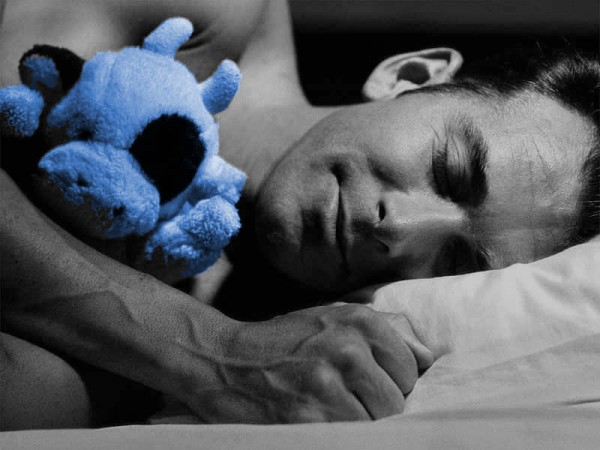
3. Relax before going to bed. False awakenings seem to be related to hyper-vigilance. So do what you need to do to feel safe and emotionally secure while falling asleep. We all have our little rituals. Time to bring out the teddy bear.
4. Stop partying so hard. In general, refrain from alcohol before bed, and stay away from caffeine anytime after lunch. If you’re prone to FAs, these substances affect your REM sleep more than others. Also, getting good sleep at regular intervals will help. This is why FAs are common with college students and those who work night-shifts, swing-shifts or don’t sleep much in general.
Turn False Awakenings into a Lucid Dream
Of course, if you are feeling adventurous, you can use the false awakening as a chance to explore the dream world consciously. Instead of scrabbling to wake up, take a look around. Explore the house. Walk through a wall and see what’s on the other side. Spin around and marvel at what happens next. In this way, false awakenings can be blessings in disguise.
If you’re having multiple false awakenings, this is a good move psychologically too. Sometimes, these spontaneous lucid dreams may be caused by some emotional material that wants to be confronted. So confront it.
I’ve noticed that, at first, my false awakening dreams are devoid of other characters. But if I wait around, or walk into the next room, often I’ll find some one who wants to interact. Often, there’s drama involved. Usually, though, an angry dream figure is looking for a chance to say some peace, to be heard. Most of a nightmare’s energy is the resistance to whatever needs to be expressed. That’s what makes a nightmare scary — the fact that are being faced with something we don’t want to see. Once you face it, with bravery and with love in your heart, the nightmare figure usually transforms and becomes more communicative. It may never come back, taking those false awakenings with them.
Image credit: “Dream on” by TheAlieness GiselaGiardino²³
I agree–reality checks are seldom as good as memory checks. The one reality check that I find reliable is “can I fly?” Regrettably, I’ve never flown during waking life 🙂
The threshold aspect is a good tip. Looking back at my false awakenings, walking through doors is when things change and when people show up.
I had twelve in a row, once. I was never phased by false awakenings until that day when I finally ended it by shrieking, “I am going to wake up! I am going to wake up NOW!” and screaming and stomping and generally throwing a tantrum. Scary! The bottomless chasm thing had to make you jumpy for a long time when getting out of bed.
When I have false dreams that are terrifying, and can’t wake up because I have no control over my body, I hold my breath. This always works, but it leaves me afraid to go back to sleep because I’m afraid it will happen again.
confront it,if not,you will meet it again very soon,i faced ton of nightmare for exp:
My love rival outclass me in every aspect that i proud of.
Ghost-ugly-dark-blackness-blind-voice-false awakening-danger from animal,creatures-maze…..
You can belief in a god,that god will save you from your nightmare just like me.
Make a behaviour something like:always giving oppinions-conclusions-judging…. i believed in dream our mind having trouble to deal with these activities.=>you can break the dream by doing so.
I dreamed a lot.There was a time that i dreamed for everyday and all the dream was nightmare.I confronted it all,i became much much braver than before.It’s a gift from “god” to help us deal with our problem.Use it well and you will happy with the result.
I just wanna share my expperience, last night i had sp and i couldnt move are talk just make a little noise, but i felt as if there was some evil thing behind me and because i couldnt turn around and look mad me even more scared but then somthing made this demonic growl in my ear because my girlfriend was just about to wake me up due to my cry in my sleep for help. crazy right? This is not the first time it happend to me but its the first time somthung growled in my phunkin ear.
thanks KMG! especially for backing up the “threshold test.” It certainly isn’t foolproof, because if you have an expectation that the next room will be correct, the dream may abide…
The bottomless chasm thing really did shake me up. I think I was on false awakening #4 at that point. I “woke up”, looked at the alarm clock — the numbers were steady (usually another good indicator of being awake), looked around, sat up, yawned, put my feet on the floor, started thinking about the day ahed of me, and then stood up and WHOOSH!
I get this type of awakening so frequently It scares me.
Kelly do you have a reality check for awakening? (like looking at your digital clock, looking away, looking back)? this plus cultivating curiosity can make for some interesting dream experiences after you determine you are in fact still dreaming.
I used to have an experience similar to this as a kid quite frequently. Of course, as its been a while I don’t remember all the details. I do remember being fast asleep in my bed and all of a sudden having this very real feeling of falling. Almost like if someone were to pick you up from your bed and just drop you with no warning. I haven’t had this happen since at least high school (graduated in 2012) and it was sometime after that when I started being able to control my dreams. I can agree though, the feeling will certainly keep you from wanting to go back to sleep.
Hello,
My name is Kalie Ivey. I am a student who is currently writing a term paper on dreams. I believe that dreams open doors to our inner selves. I have so many questions that I hope to find the answers to. If you have time to email me that would be greatly appreciated. Thank you for your time.
Sincerely,
Kalie Ivey
1. Some people believe that dreams come from chemical reactions in the brain or an overworked mind, while others believe they are a result of emotions or fate. What are you views on this?
2. In Sigmund Freud’s book, “Interpretation of Dreams” he states a hypotheses that we can control our dreams. Do you believe this to be true?
3. Why do we dream?
4. Can dreams be used as an escape when life becomes too hectic?
5. I’ve come across many websites that give dream interpretations. Do dreams mean the same for everyone?
6. My dreams are not always good, but I feel like they reflect my life and what’s yet to come. Sometimes I wake up feeling relieved while others I feel drained. In your opinion, to what extent do dreams play in our lives?
Hi Ryan,
I was reading through one of your posts and saw that you came across Conscious Dreaming around the time you were looking for grad. school’s to study dreaming and consciousness… A similar thing just happened to me (synchronistically finding Robert’s book) and I’m looking into schools now–know of Saybrook but wonder if you’ve found any others…
Thanks for any and all advice,
Nick – atlas.nick@gmail.com
hi Nick — there are few, most are in the San Francisco Bay Area, which is kind of ground zero for Dream Studies.
1. Saybrook has a dreamstudies certificate that can be linked to a MA or a PhD – but it’s a distance model, classes meet 3 -4 times a year.
2. John F Kennedy University. This is where I got my MA in consciousness studies. they have a lot of dream studies courses, enough to make it a concentration in one of several MAs in the holistic studies department.
3. California Institute of Integral Studies (CIIS). Similar to JFKU, this school offers several MAs and PhDs in psychology and philosophy with some highly qualified dream studies professors.
4. Institute of Transpersonal Psychology (ITP). More clinical and research focused, but with many top notch methodologists who are familiar with the portal of dreams as a way of knowledge.
5. Pacifica Graduate. This school is actually in Santa Barbara, with foci in depth psychology and mythology studies. excellent for a focus on dreams.
All of these schools are private and accredited by WASC. So it’s a “real” MA or PhD, and afterwards you’ll have the student loans to prove it.
I have these false awakenings all the time, and i am so scared when i experience them i try and wake up immediatly, i often think they are trying to show me something i dont want to see but i need to, amy thoughts?
Don’t try to wake-up! Relax, enjoy the privileged of existing in a virtual reality environment of your own making and explore your new world. The fear and anxiety comes from resistance. If you really want to ‘exit’ which i think is a wasted opportunity, the best thing to do is lay down close your eyes and ‘go to sleep in the dream’.
Anna,
I have also found that false awakenings can lead to confrontational lucid dreams where we can learn something. It’s basically a chance to be open to ways of knowing that are not centered on logical/egoic awareness… but where we may participate and dialogue with autonomous sources of knowledge/perspective.
I agree Richard — but I also would never chide someone for being fearful. sometimes fear is justified. As psychotherapist Scott Sparrow, author of “Lucid Dreaming: dawning of the clear light” has said: fear is the first step towards recognizing a worthy adversary. sometimes the “adversary” is more than resistance to being in the state (or fear of the unknown) but rather fear of unconscious material that more easily comes up in this arena.
But as you say…it’s an opportunity, and if you decide to exit, you can always try again later!
Hello Ryan/Anna. I certainly did not mean to chide, apologies if this is how my post came over, but as Sparrow also states, confronting the feared symbol/figure often transforms it into something not-threatening, even friendly and very useful in resolving problems, analysands spend thousands of dollars with Jungian psychoanalysts and other therapists to undergo ‘guided imagery’ therapy, whereas the lucid dreamer has this for free, without being encumbered by the therapists own mindset, and in the much more potent and rich environment of the lucid dream.
hey Richard — I also apologize, didn’t mean to imply you were chiding — poor choice of words on my part. I think we’re on the same page. The process of facing these kinds of things requires a lot of courage — and without fear, there is no courage. that’s all I’m sayin. and yeah — it’s amazing how lucid dreaming cuts to the quick of the sorts of things agonized over in talking therapy. they also are tools that can be used together — not every Jungian psychoanalysis is against lucid dreaming anymore.
I never heard of False Awakenings in my life, until this morning when I told my wife about a dream I just before waking up.
I woke up, brushed my teeth, took a shower, got dressed and headed off to see a customer located in San Antonio, Texas. Note, I remember driving the entire distance. (180 miles) I entered the building and asked for the person I had an appointment with. I informed the person I spoke with that I was early. So they asked me if I wanted to wait in the employee cafeteria. I then went to the cafeteria, but noticed all the people going to break were looking at me. I really didn’t think much of it, until one gentleman asked me if I was okay. At that moment I had a strange feeling that this whole morning was a dream. I could not get out of it. I new I had to awaken in reality and go to work and thought, if I don’t wake up, I will oversleep and be late for work. I then sat down at a table and placed head down in my harms and told myself to go back to sleep and wake up in reality.
I have to say this was the strangest dream I have ever had. Even my flashbacks from Vietnam weren’t this weird.
By the way I made to 60 years of age before having one of these FA’s.
I have been having them a lot lately! I’ve never had them before! And I have to say, I dislike them very much. In my dream where I’m ‘awake’ I know I’m dreaming and I keep trying to wake up. It’s so scary. When I first started having them I was so confused, but now I know that I am asleep and no matter how much I scream for my husband to wake me up, it doesn’t work. Most of the time he has left for work already and I dream that he’s still here getting ready, but I know that he left already so it just freaks me out! I would very much like to be done with these false awakenings. :-/
I have similar type dreams and what always works for me is holding my breath. It won’t resolve the underlying issue, but it will make you wake up!
it’s so weird, I woke up the 6th time, talked to my room mate who was playing poker online, when his poker rang, I saw myself sleeping in my bed, I woke up again, and his poker rang again and I saw myself again lying in my bed… It happened 4 more times until I decided not to rise and just call the name of my room mate.. That was when I was genuinely awake.. Nevertheless, the false awakenings were so true that I felt so tired when I woke up knowing I woke up 10 times only to find out that my body is still asleep… Is it possible that my soul woke up but my can’t bring my body to wake up?
hey Eumie, I don’t see it as soul versus body, but rather a strong conscious expectation to be in your bedroom when really you are still in a dream. The single best test is the reading test, which Stephen LaBerge talks about. read some words — look away– and then look back. usually, dream words shift. the linguistic brain is highly active in this state, and words are just shifty. give it a try next tim — and then wake yourself up for real!
I work from home and have been having false awakenings lately. This has started to be a huge issue though since in my normal day I do not leave the house. In my latest false awakening I wake up and look at the clock and I over slept, so I shower and walk into my home office and start work. Then either there is a knock on the door and I have a package waiting or their is an intruder in my house, or sometimes the day just continues and I see strange figures out of the corner of my eye and when I look there is nothing there… When I reach a level of high stress I normally wake up or false awake again and go into something new… Any way its extremely distressing because I can never tell whether or not I have awakened yet and reality and dreams are starting to blur… Any thoughts?
Laura, try the suggestions in the article: the memory test and the threshold test. Also do a little jump – sometimes in dreams there’s a little moment when you hover in the air before coming back down.
I’ve been having false awakenings on and off since I was a child. Except most of the time they are combined with nightmares. They seem to have become more vivid as I’ve become older and sometimes makes me afraid to go to sleep at night. The dreams will often consist of something chasing or coming at me (whether it be a person or an insect, some sort of creature etc.).
I usually try to shut my eyes and go back to sleep, but sometimes I get so scared I jump out of bed and try to swat whatever it is with a pillow or run out of the room screaming.
Usually waking my husband up, which does not help either of our sleeping habits.
Any suggestions on how I can stop having these nightmare/false awakenings?
Hi,
This phenomena is relatively new to me it has been happening more often in the last few years its extremely scary.I do try to physically move my toes but keep returning to the dream,at times i keep screaming to myself wake up but i cannot move and start to panic in my sleep,when i wake up it takes a while to adjust usually im out of breath.
I do not drink or smoke or have any other addictions.
Is there any therapy or medication that can help.
scarlet_tears and Gurpreet, I don’t know any way to stop having them, but you can work on how to deal with them. Some people do, however, see psychiatrists and ask for medications than can dampen dreaming in general (SSRIs). effective, but at a high cost in my opinion. a simpler path is to work on fear and courage in the lucid state. You may also want to incorporate more relaxation techniques into your everyday, particularly before bed. See my post on the best herbs for sleep relaxation:
http://dreamstudies.org/2010/07/13/5-most-effective-herbs-for-sleep-and-relaxation/
I tried the technique on drinking warm milk or camomille tea before bed. Also, while I am having the dream tried to just keep blinking my eyes until I wake up. Seems to be helping, but sometimes I still get the dreams depending on the subject it can still be pretty scarey. But it is getting better. Thank you for advice, will check out the herbs.
Very true, if you think you might be dreaming, you always are. Having that realization has caused most of my lucid dreams.
To wake up: shake your head back and forth (quickest way I have found to wake up for real)
It can be a bit freaky realizing you are not really awake. I tend to wake myself up for real when ever this happens because I don’t want it to keep occurring.
Even though I am a big fan of lucid dreams, I don’t like when they are ‘too’ real. I would rather be atop of a beautiful waterfall or something for instance, then in my apartment.
I once had a dream that i woke up, I walked around for a bit then woke up again, and then again, it got to the point i was just lying on my bed in a state of constantly waking up, i would say like 7 times, finally i though as last ive woken up, pinched myself and then i woke up for real. This happened years ago and i havnt had dreams like it since but just lately they have come back.
I have been having false awakenings for about three years now I’m almost 27 and had never experienced this before and until tonight they have terrified me mostly because I can’t get any lights to come on. This is a recurring theme, in fact all of my false awakenings have this in common including tonights FA, but I entered a lucid dream I think because this was tenth or twelfth time and I was enjoying it until I heard a voice whisper “Are you in there?” Scared me so bad I forced myself awake which I’ve become fairly good at. Just wondering if anyone else has heard disembodied voices in lucid dreams? Just want to know how to enjoy these things. And yes I am awake at five a.m. because this dream scared me so badly.
Andrew,
I would call that a meeting with the Guest. Ever read Rumi? http://www.panhala.net/Archive/The_Guest_House.html
Robert Waggoner has done some fascinating exploration with “the voice behind the dream.” in his book Lucid dreaming: gateway to the inner self. Waggoner shows how these can be positive encounters. I would say that having trust, playfulness and gratitude in your heart in these meetings will co-create positive outcomes. scary ones happen too though as we project our fears beyond the ego’s control. the mind is prone to doubling the self… do not take it for something more sinister, I assure you, this is all part of the wacky wild lucid experience.
Andrew,
Yes I have had voices in the dream whisper to me. One was nice. It sounded like a guy. I think I was thinking hard about if I was awake or not and he said so you realize that you are dreaming? Well wake yourself up then. Come on wake up quick!
My teenage daugher was distraught this morning after a dream with 2 false awakenings. I notice the comment that poor sleep patterns & studying can be factors but I wondered if anyone has experience of food additives or preservatives causing them?
Hello,
I have read alot of these posts but haven’t found anything to help yet.
I have these dreams myself exept its always 3 dreams in a dream which is a problem for me. I have a 1 yr old baby who counts on me to support her and its scary because I am starting to get really really confused with sleep situations and reality. I have tried to sleep in my dream, open my eyes, move body parts, and jump and i can actually do alot of these things at the time. I distinguish my dreams are false awakenings due to circumstances of events in the dreams (Most of the time they are horrible events) Eventually awakening but feeling so emotionless and drained. I am worried it may eventually prevent me from attending to my daughter as needed when she awaks.
Hi Emily,
sounds like you’re in a vicious circle. I have heard other parents of infants talk about this issue, the heart of which is that you are most likely sleep deprived. no kidding, right? to answer your first concern, the worry that you won’t wake up is probably not an issue, as you are actually experiencing TOO much vigilance when asleep, and that’s leading to increased lucid dreams. while the false awakenings are disconcerting while they happen, nonetheless they are harmless and there’s no evidence that they contribute to not knowing reality from dream while you are awake.They are emotionally taxing however, so getting better sleep is the most important priority. Can you find time in your schedule to get more sleep? Can you sleep when the baby sleeps? Can you take catnaps at other odd hours when you have 30 minutes to spare? You may also want to pose this question to my colleague Erin Langley, who also experienced many unwanted lucid dreams when she was parenting a baby. her blog is: http://luciddreamconservationproject.blogspot.com/
Thank you, thank you, thank you. I went to sleep last night very early, and woke up very early this morning, early enough that I decided to go back to sleep, resulting in a stream of lucid false awakening dreams where I was laying on my side in my own bed, unable to move or talk, while a version of myself (or rather, a manifestation of all the parts of my personality I am not proud of and generally try and avoid) leaned against the wall and varied between yelling and screaming at me, trying to get me to slip into a real dream instead of waking up, and threatening me. Mixed in were several “false awakenings” and one real awakening, where I ripped off my sleep mask (which I could feel all while I was sleep, and kept trying to take off as an attempt to wake up). I fell right back asleep and the same thing happened. Absolutely horrifically terrifying, 100 times more than any nightmare I’ve ever had, because I kept thinking, Oh my God, this is what I’m really like–what will happen if I ever DO lose control of my subconscious? I’ve been shaky and scared ever since I woke up for real the second time (whereupon I promptly chugged an energy drink and turned on a light) two hours ago.
Your site has been an absolute blessing. So many things you’ve written about I experienced in the dream–right down to wiggling my pinky (despite never having read that technique before!) I remember thinking maybe it would get my blood flowing and wake me up (it didn’t, but next time I will know to either relax and go with it or try and scrunch my face!). I also, during the only false awakening where I actually got out of bed, realized I was dreaming right on the threshold to my bathroom, where I promptly realized I was dreaming and had ANOTHER false awakening right back in my bed, arguing with my dream self (again).
All the elements you mentioned where there–resistance, fear, some kind of erotic feeling (my dream self was trying to get me to relax into an erotic dream and I didn’t want to because I’m generally fairly uncomfortable with that sort of thing. It succeeded at one point, I did relax into another dream, also taking place in my bed, until it felt too real, and I panicked because I began to wonder if I was drugged or something).
I’m terribly sorry for rambling, it was just such a completely unusual experience like nothing I’d ever had, to come here and realize I am not alone, that this is natural, explainable and something others have experienced in some form or another, has done more for my piece of mind than anything. Usually, writing out nightmares helps me release from them, but they were never lucid, and 1500 words later, I was still freaked out by all this. My last thought this morning before I fell asleep was “I hope going back to sleep won’t cause me forget the wonderful dream I had last night”, so I guess my brain just took that and ran with it.
Thank you, thank you.
welcome Diane and I hope you rest better knowing you’re not alone, and that there’s some things you can do to prevent further false awakenings from stacking up.
Hello
I just had a frightening series of FAs. I am staying in a hotel tonight and dreading going back to sleep and possibly having more. In the FAs I would scream myself “awake” and wake up my friend in the hotel room. It actually took more than screaming; I would have to roll off the bed, spaz out, and jump onto my friends bed. I kept ending up in sleep paralysis in the FAs, sometimes laying on the floor wrapped up in my blanket trying to scream, and, of course, my voice box was being stubborn. The worse part is that I was having a nightmare before each FA. I won’t go into the details now and I’m forgetting anyway, but it was something like having visitors from the paranormal world. It reminded me on the scene in the recent movie Insidious, where the woman finds the little boy in a hat scampering around her house. After each FA, not much happened before going back into the nightmare; I just looked around the dark hotel room. There’s no way I could have seen abnormalities or realized it was a FA since I’m not familiar with my surroundings. So that is basically my story. It has been scary and i Googled it and found this thread. I did take some philosophy but forgot the term false awakening. Wanted to see if anyone else went through the same torture.
Regarding some of the posts I’ve read, milk almost always causes me to have a dream when I drink it before bed. I agree that alcohol and caffeine mess up your sleeping routine. For me, eating a lot before bed increases the chance of dreaming, too. Any time you go to sleep without following your typical routine I think dreams are more likely. Example: sleeping with your head on the opposite side of the bed makes dreams more likely. Well that’s it so wish me luck not having another FA tonight. After I literally woke up earlier I woke my friend literally to prove to myself I was up.
I’ve been able to lucid dream since I was a was a kid. But lately now (approaching 40), I’ve been having lots of multiple FA’s in one night. It can get kind of annoying.
Last night I FA’d several times, and once I realized I was dreaming, I would “wake up” and go find my journal, and feverishly write notes about what was happening in my dreams, trying to recall as many details as possible in my notes. This happened repeatedly throughout the night, and in the morning, there was nothing in my journal. But, I still remember quite a few of the details as I’m writing this many hours later.
I’m always kind of scared of this happening. I manage to forget any fears before I actually fall asleep and I can actually choose when to make my dream vivid or not. I might remember really strange dreams. What I hate about this problem is my photographic memory. Once I see something that’s shocking I can remember each and every detail.
False Awakenings havent happened too often for me to remember, but the one I do remember scared me. I was walking around my room, and then I noticed the furniture was from when I was younger [about 7-11, I’m a teen now], but I still felt like I was in reality. When I finally saw I wasn’t, naturally something scary pops up. It was kind of like a banshee. And now I have it stuck in my head forever due to my memory. Anyone know if I can fix this problem? Dreams with shocking images always leave me with a mental scar since they often follow me throughout my everyday events.
The “falling abyss” is actually pretty comforting to me. I like the feeling of my stomach flopping over and when it does happen, I always wake up with a jerk. And I know I’m awake. So I would much prefer it to my usual nightmares. A lot of my dreams actually end with me falling. It’s a bit annoying waking up at 4:35 AM with a jolt, but it beats knowing if I’m awake or not.
Also, I know this is irrevelant–I notice after I have a especially vivid dream, the week after I see little sparkles in the corner of my eyes. Anyone know what this is?
Hi Ryan ,
Can anybody have these dreams, because im 15 & super scared ??
Don’t worry about it Briana if you haven’t had it… it’s not all that common. Not a curse anyways, but an opportunity to explore the dream world safely!
Hi,
I’m 14 and I’m from Serbia.Today I’ve heard some of my friends talking about lucid dreaming and false awekening so i decided to find out something more about it.Now when I know more I’m very scared to go to sleep because I don’t want to something like that happen to me.
you’re safe. lucid dreaming is usually experiences as something exciting and positive — most people fly when they learn they are dreaming. do not let worry eat you up. 🙂
Hi, I just found your site after having multiple false awakenings last night. This is the third time this has happened to me in the past few months (I suspect due to some sleep meds Im on).
Thing is its made me unsure if Im awake or not right now. Everytime Ive worken up, it turned out to be a false awakening. What if Im still in that state right now?
Im trying to look for odd things to try to work out if Im now properly awake or not and a couple of odd things have happened. eg Someone who was supposed to show up at my house didnt arrive. Ive also had some synchronisity things happen since I last awoke so Im now wondering if the day Im now experiencing is just another false awakening in the run of them Im having now?
If you replied .. that still wouldnt tell me if this is real or not as subconciously I can manifest a reply. Im feeling so so confused and now cant tell what is real and what isnt. I had an anxiousity attack earlier over this but have decided Im not going to let it worry me.. whether Im currently in a false awakening or not.
My false awakenings were basically just daily events… annoying as when each time I work out its a false awakening and go back to sleep. I wake up only to then have to go and start repeating all my daily stuff again due to believing im awake.
The memory test you mentioned dont work for me as I have an illness in which my waking life memory is affected anyway so cant remember my phone number in waking life and in my dream state, I can remember my house address. I can even read things in my dream state okay and the letters dont blur or change.
I’ll start trying the threshold thing to try to work out if Im awake or not.
I used to be a regular lucid dreamer and quite good with that.. but the thing is I tended to KNOW i was asleep or became aware of it while in the state, so didnt have the issue Im having now.
Im finding that to be a completely different experience to this waking up over and over stuff and each time thinking it is real.
My first experience with these FA also made me thought the same, how do I know, if what is happening around me is real or not, what if right now also I am dreaming that I am “awake”…. And then I started looking at each moment of life as if it is a dream…. And things have changed, “I” have changed for good…. Now I understand the indian concept of “maya” (illusion)…. May be you can try it too 🙂
Hi, I’d like to inform you about my latest false awakening AND lucid dream. I’m currently a 15 year old boy.
False Awakening:
If I recall correctly, my false awakening had happened around 10~20 times in the same night, as multiple times I had attempted to leave my bed and walk out of my room. Around the last few times, I was most successful, as I was able to leave my room, enter my mom’s room, and enter her closet. I even went to the extent of rummaging through her items, and unraveling her diploma. I did this in an attempt to differentiate between reality and my realm of dreams. To this day, I can remember having around two or three sorts of dreams along the line of a “false awakening.” Sometimes I would put effort into waking up, by trying to yell or move my body.
Lucid Dream
Being 15 years old, you can infer that I’m new to high school. I actually had the chance of exploring around my school, going through various rooms, all when I was aware I was dreaming. It seems as soon as I try something that’s incapable of my capacity in real life (ex. flying) I either wake up or my degree of lucid dream decreases by a significant amount. There was no ominous or scary part in particular of this Lucid dream, however it was the most vivid in my imagination.
Unknown Category
This dream was most likely, in my opinion, the scariest. I was dreaming, however could see around my room. I was unable to move around, for I was paralysed within my bed. All of a sudden, colors started flashing in my head and weird sounds, which were identified/related most to traditional Mexican music, weirdly. Any help would be greatly appreciated.
I just want to know how I can change scenery more easily as I had really frustrating FAs last night. Thirty-seven times I woke up in my bed and in the dark, the same as when I went to sleep. I know it’s a dream because any electronic screen I saw was constantly changing. I’ve had crazy loops like this before but I just can’t seem to transition into lucid dreams and it annoys me. I feel like my imagination is broken and I have to wake myself up so I can fall asleep unaware. Any suggestions?
Try making an intention to focus on ONE visual image — such as a doorway or portal– before you go to bed. Strengthen the intention by role-playing in your minds eye how it appears, and you going through it, and coming out into a brightly lit lucid dream. Make it an evening meditation for a while… be patient… and when it happens again, you’ll be ready.
I have been experiencing these false awakenings for some six months. I actually believe I have woken up, showered, and although not working at present have attended the same.
I go to the strangest places and situations. I could spend hours describing these. At the time I completely believe I am there.
I have learned to fly. I can take off and sweep over anywhere.
I see the most amazing creatures.
Everything seems so real I do not want to wake up.
My daughter is arriving home from school at around 3pm and I am still in bed.
I used to be up at 6.30 but am unable to wake.
Any advice would be welcome.
Thank you
Caro
Caroline, the rule of thumb for “when to get a sleep doc referral” is basically when you have had two weeks of new disturbing sleep symptoms that are getting in the way of living life. many times oversleeping (10 or more hours of sleep) is symptom for another health issue that is coming into the foreground. perhaps the dreams can point you to where the problem may live?
Hello, I just stumbled upon this site while researching False Awakenings like most of the accounts held above. Well my account of an FA was when I was 16, I remember basically everything that went on but the thing is, the dream lasted for years and that I only noticed it after I ‘woke up’.
Because of that incident I somewhat lost the hold of what was real and what wasn’t. I was lost.
Unlike most FA’s where people are aware of the incongruities and have the creativity to craft their world, I lived in my dream for approximately 2 years without notice. I lived almost 2 years in a dream, can you imagine what kind of impact that could have on you when you wake up from it? Probably not.
In the ‘dream’ however, I woke up and the year was 2009 because I had a calender hanging on my wall and that’s how I know it was a dream. I get up and did everything like normal, talked to my father, ate breakfast, remember the weather. But, days passed by and everything was normal. Than I met somebody, a girl. And like the teen I was I wanted to get to know her, so we went to movies and did things together. I remember her so clearly, Sarah R. Hayes. She has blues eyes, dark blonde hair and fair skin and this little birthmark on her left leg. Anyhow, I met people, had fun. Lived life, y’know? I got a great paying job after a few months and everything seemed to be going great. By this point my birthday has passed. (In Sept.) 2010 comes, months pass. It’s July and it’s all going great still. I have a great girlfriend and my family is doing great. I remember going to the beach with friends. Kevin, John, Katelyn and Rebecca. But now it’s Christmas, 2011 and I’m late for a date with her, I have a ring and I was sure I ready to propose. I get to her place and nobody is home. I was upset and tried to call her. After an hour of waiting I decided to head home. I laid in bed and decided I would do it on New Years. I fell asleep and woke up. Went to the bathroom and everything was off. Everything was changed. The covers, the drapes to the shower. I looked in the room. It was the room I stayed in while I lived with my father before I met her.
At this point I was panicking. I asked my father what year was it and where was Sarah. My dad blatantly replies “What do you mean what year it’s 2009 and who’s Sarah?” I could NOT believe what was going on. I was literally scrambling to find a shred of evidence to prove myself maybe I was dreaming and had to wake up. But I didn’t. I was awake. I laid in bed wondering, “What happened?” And eventually I fell into depression.
I’m sorry if this story seems a bit far fetched but I can honestly recall memories of ‘nobodies.’ And Sarah.
It’s been over 3 years now and I still don’t know what happened. I would like to know what kind of dream was that. I would greatly appreciate it. Thanks.
Hi, i’ve experianced FAs since i was a kid. But it is now becoming more complicated. I usually awake in my dream and do my daily routins like i wash my face, eat break fast…and i realize zat i’m asleep. So i try to wake up again and again. And in my dreams i thought i’ve gone to school, so when i realy wake up i usually find my self late for school. I’m freaking out. Plus my parents don’t understand me. :-/
When I have FA its always nightmares. They come just as I’m falling asleep, and are always set in my bed. It usually starts with either a feeling of a weight settling onto my bed, the covers being pulled, or, more commonly nowadays, a voice speaking in a language I can’t understand whispering, talking, or sometimes screaming into my ear. I’ll recognise it for what it is, and wake myself up. Quite often I’ll wake my partner to tell him, and he turns and attacks me, usually biting me with huge Sharp teeth. I’ll wake myself again, open my eyes, sit up, have a drink of water, then I’ll hear footsteps on the stairs, or whispering, or banging on the bedroom door. So I’ll wake myself again.
I think a lot of the time I’m successfully waking, but starting to drift back off almost immediately. It can go on for hours sometimes, and is very distressing. The only times I’ve ever had FA without it being threatening was when I wad on codiene painkillers for an injury, then it was almost fun.
Hi, i just had worst experience ever. In dream i woke up with a slight pain in my side and got out of bed then noticed my intestines were hanging out my initial thought was id been stabbed in my sleep and rolled around losing my intestines out the wound. Then i i woke up checked my phone and it was 11.06am. I felt pain again checked and nothing so went about my day except its a day id remem. I was in a store were people started being hacked to pieces by boobie traps and pople were butchering others. I tried getting away but got killed. Then i woke up checked fone 12.14. Had pain checked and instestines out then my wall disapeared n they was tied to a car which drove and pulled them out as it weent over a cliff i remem lungs and stuff ripping out as i gurgled and died. Then i woke up agen out again. I tried scooping em in n held them as i walked out door i saw a knife tbis time prepared to defend my self as i was approached in a corriedoor i killed sum then a cook with a clever sliced me in pieces and as i waited or the peace my body started curling up and going stiff. Then i woke up checked fone its 12.06 check myself slight pain no guts lying in bed im scared kept checking ova and ova incase but iv been up now half hour after lying it out in bed coming to terms. Still not sure if sumfings going to happen tho and u sed if u doubt ur still dreaming. My heads fuzzy and im second guessing everything around me
Lol I have had a couple of fa’s and they really do get out of hand Iam a truck driver and I have had dreams where I get up and start driving and get into huge wrecks kiling a bunch of people including myself. Then get up again to get into anothet crazy dream. I recently been wacthing the walking dead and had the most insaine fa ever the zombie appocolipse at the truck stop people were ripping each apart they were coming at u all out full speed ripping you to $hit woke up freaking out and on edge got out the truck with my knife in my pocket look around it see if I was going get attaked but I had a good laugh later
I commonly have false awakenings where literally everything appears normal, I have normal conversation with the usual people have a totally boringly average day, and then go to sleep, which then lets me actually wake up feeling drained and realizing it was a dream. So I literally wake up having experienced an entire average day while sleeping. Does this happen to anyone else? Because all I can find are people who say their dreams “take a turn for the worst” or “reboot” but mine literally end with me going to sleep at the end if my day.
Sorry for my long post but i really need some advice and input!
I had my worst false awakenings yesterday night. Mine always happen after I,ve had one dream and can very easily tell that’s it been a dream, and It goes into a dream as if I’ve already woken up, lying in bed the same way I went to sleep. Is been happening for a while now, maybe since a year and half or two years ago but now for the past few months they’ve been happening more often and are getting stronger and harder for me to recognize the difference between reality and dreaming. Anyways, the dream I had last night was me lying in bed and it took me a few seconds to realize that I was dreaming, and so I always call out for my mom whenever this happens but i can ever speak or it comes out as a whisper and I close my eyes and concentrate to wake up. I always feel a weird energy or presence over me, sometimes even see a black figure standing over my bed and usually after one I wake up for real. My bed is pushed against a wall and i always face the wall side now wen i sleep because im scared that if i sleep on the side open to the rest of-my room, that i,ll see something standing over me. Well last night it happened for 3 or 4 times, each time dreaming that yes I,ve awaken, lying in bed, everything the exact same as reality. And on the last one, I swear to you I thought I had woken up for real and had no question about it and I called out for my mom and was kicking my legs but half of my body seemed Numb and I thought i was just in shock. I heard my door open and I thought my mom came in ( I didn’t see because I was facing the wall and refused to turn and look the other way) and felt my mom pulling my legs and after a few seconds I woke up for real and was completely terrified. I cried and cried and forced my self to stay up because I didn’t want to go back to sleep and have it happen again. I thing that scares me the most isn’t the content of my dreams, but the context of it because they seem and are becoming way too realistic for me. I used to be a scary movie junkie but know I can’t even watch a trailer when they come of tv and quickly change the channel. I don’t want to tell my parents because I know things like this really freak them out and I had no idea other ppl were going through this as well, and so I would really appreciate any insight/information from you guys!
sorry Sara just now saw your post. the realness of the dream can be creepy at first, but when you reframe it as realizing that you have a very lucid awareness during a dream, you can use the FA to explore the dream or even ask questions to the dream. it’s a creative place to be. I am thinking about opening up a forum on this topic soon, so hopefully your comment and others can be seen by more people interested in talking about this stuff.
hi my name is Melia from Indonesia…
yesterday i got false awakening, and this not my first time… when i have a lot of job, i always FA until 5#. I dont know what happen with me, and i decide to search about this. Thanks a lot for FA information…
Well I just googled what happend to me and this came up!! I woke up walking around my house! I then realised it wasn’t my house! And couldn’t get out! Then freaked out! Heart racing! Knew I was walking around but didn’t recognise any of the rooms! So scary! And never want it to happen again! But the only reason I remeberd this the next day is when I left my house I looked to the shelf by my door to c a silver key! Thought my neighbours had popped my spare key that they keep thru my door but it didn’t fit the lock! Still no idea where it came from! All I can say is it was an awful experiencea!
Hi, i’ve been havin FA for a couple of months now, they happen occasionaly, however when it happens i can’t move i feel like i’m paralysed so i start screamin for my parents and it feels like they are responding but no one ever comes. When it first started it happened quite alot and sort embraced but when it happens after a couple of weeks it really freaks me out. Why does it feel like im paralysed?
hi Rhen, sounds like you are consciously experiencing “sleep paralysis” which is something that always is happening during REM (dreaming) sleep. it’s not dangerous, or abnormal. just relax into when it occurs and it will pass. you can also use that time to enter a new dream because if you are in sleep paralysis you are really in a kind of lucid dream but with the ability to feel your real body. it’s like being stuck in the threshold between waking and dreaming.
I’m 16 and I’ve had FAs occasionally since I was 14. But recently they’re getting more and more common and much more terrifying. Usually there’d be 2/3 in a row and I’d get up and dressed for school as normal each time. But I’ve been really stressed with exams recently, haven’t been sleeping or eating very much, and have had reoccurring vivid nightmares where I’ve been chased by a tall man with a strange face. This morning I must’ve had 4/5 FAs in a row. The last time I lay in bed, opened my eyes and there was a horribly mutilated figure standing at the end of my bed. This terrified me and jolted me awake. I wouldn’t mind FAs if they were not so scary. Is there a way I can make them less scary at least?
I almost always have a FA of my doing something on my computer, like watching Netflix, playing a video game, checking email, something like that. Looking back, I can never remember exactly what I was doing or what was on my computer screen, but I never notice that at the time. Then I will look away for some reason, and when I look back, the computer is gone, since I have just started to wake up and the computer was never on my bed with me in the first place. It has happened enough times that the computer being gone is what triggers me to know that it was just a dream.
Hi, I think that the first time I had a False Awakening was when I was 14 (I am 34 now). I was in my bed at night, and I turned around and saw my sister sleeping in her bed next to mine when I realized that my sister has been living in another country for at least a year and could not possibly be in our room.
The FAs have happened repeatedly, but the one thing I haven’t seen mentioned here or anywhere else is the physical symptoms that accompany it.
I am always aware when a False Awakening is about to happen to me. It is preceded by increased heart rate, a chill all over my body that causes me to shiver, and a low frequency that attacks my ears in waves. I have learned to wake myself up, I try hard to open my eyes, but my eyelids feel like they are a ton each, and I fall right back into sleep or another lucid dream. I have to make A LOT of effort to wake up.
What I need to know, Ryan, is if these physical symptoms are part of the FA experience or something else completely?
Thank you for your time and sharing your expertise
Hi Rasha, FAs are dream experiences, and usually REM. in REM sleep we lose the ability to regulate body temperature well, so if the room is chilly, it’s possible that the body will lose some heat, causing shivering responses. it’s temporary. The other effects sound like part of hypnagogia, or the dream like effects of sleep onset. they’re not dangerous either, but they can be quite weird!
Ugh this happened to me last night and was HORRIBLE! Background, my father died 2 years ago and yesterday was the 2 year anniversary of the last day I saw him, so I was in a sad mood all day.
First wake up – woke up in my bed, cat purring. My husband had fallen asleep on the couch (true), I went and laid next to him & we started fooling around.
All of a sudden, I wake up in bed, again. Realize the first wake up was really a dream. I get out of bed to walk to the living room, and feel strange, almost possessed, like I have no control over my body.
Then, I wake up in bed again. Again, cat purring, but now I’m pretty sure that I haven’t really woken up and am just dreaming. Walk into the living room scared and wake up my husband to ask if I’m awake or not. He tells me no, and that there’s a demon next to me!!
Then, I wake up again. Cat purring again, but this time I KNOW I’m dreaming still. I shut my eyes and WILL myself to wake up for real. But, I can’t. I open my eyes and know I’m still dreaming.
Here’s where the panic sets in. I’m diabetic and think that my blood sugar went to low, and I may have slipped into a coma or am dead already and this is hell. I know that my husband is sleeping on the couch and won’t find me until morning. I SCREAM yell trying to wake up, but can’t.
So, I decide to go drastic and start gagging myself with my hand in the “dream”. No vomit is coming out and I’m about 99% sure I must be in a coma or dead, but I keep gagging myself and then BAM, I wake up for real (cat IS on the bed purring).
What is even worse, when I woke up I still feel lightheaded like my limbs aren’t attached to myself. I test my bloodsugar (which is fine) and then sit on the couch, almost in tears because my whole body just feels WEIRD. Even thinking about this brings the sensations back right now.
Anyways, I’m happy to read that I’m not the only one these things have happened to. I don’t know if it has something to do about the stress of the day and my dad. Looking back, I wish I would have tried to use the “lucid” part of the dream to try talking to him (haven’t had any dreams yet where that’s happened). Maybe next time I’ll try that, if I’m not too panicked about my blood sugar.
I seem to have a sort of backwards version of FA that I experience frequently (I think). I will be certain that I am awake and desperate to fall asleep, even convinced that my eyes are open and I can see what is going on in the room, when my husband shakes me and tells me to stop snoring (which I am not aware I am doing). If I were truly awake, I would either not be snoring or, if congested enough to cause breathing issues, would be aware of it.
I’ve been told that it is a form of insomnia, where the sleeper believes s/he is awake and therefore does not get the restful benefit of true sleep.
Has anyone else experienced this/heard about it? It seems to happen to me often, like 3 or 4 times a week, and has done my entire life.
Thanks!
Want to stop having terrifying false awakenings? Dreams work very well with habit from my experience. If you tell yourself you are going to do a reality check EVERY time you wake up, this intention well pass on to the dream world. The next false awakening you well know that that is what it is, and you can be calm. Just remember if you get lazy and dont do a reality check, (again your intention passes through to the dream state) you won’t do a reality check during a FA. For those new to lucid dreaming I suggest looking into it if this FA situation is troubling you. Also it is fun once you understand it! remember it is all about intent and following through. I’d you don’t knowwhat a reality check is. Look up examples. The one I use regularly is looking at my hands (there are always more or less than five fingers on my hands in a dream) hope this helps, any questions feel free to mail me jordanparrott@hotmail.com
HI
I got a Stephen King book for Christmas called Doctor Sleep. On page 70 he mentions false awakenings so i googled it and found this site. I thought I was the only one who had these – I didn’t know that they had a name, so its reassuring to find out that they seem relatively common. I only have them when I have an afternoon sleep, they are often repeated four or five times, scary people come and talk outside the bedroom window. I don’t see the people but I know they mean me harm.
Thank you all so much for sharing your experiences and I will certainly try the awakening tips.
Sue
Hi Sue — thanks for the note. and whoa cool! King always has used nightmares and dreams for inspiration… I will have to pick up his new novel.
this site is very helpfull, thanks! i am starting to have these dreams very often..each time I end up on my bed and i am stuggling to wake up. the wirdest was when i heard somebody walking up the stairs, finally i saw that man( not the face) walking in another room like searching for something. i knew that i was dreaming but I still panicked..i couldn’t move from the bed. so i said something. in that moment i heard a loud noise that made be think that man will come and attack me and i woke up. but now i often hear that noise when i am waking up from this kind of dreams. i would really like to experience the good parts of lucid dreams but i am really afraid of finding other people in my dream. how can i controll this fear?
Ryan,
Thank you for your ever tending information. I have been f.a. as long as I can remember. I can usually catch it and wake up now by the 3rd dream. I do both techniques, and one always works, of either opening my eyes or trying to kick.
Can you please tell me the percentage of people with f.a.’s? and why we do this? Is it hormonal? Why are nightmares so prominent? I understand “everyday” dreaming as “real life” issues but do you really believe f.a.’s to be the same?
Can I control a nightmare as easily as a non nightmare?
Thank you,
L.b.