 Scientifically speaking, what are the best ways to go lucid in a dream?
This is the subject of a recent essay published in the journal Consciousness and Cognition. The authors, all German and Swiss researchers, looked at 35 studies of lucid dreaming induction, or techniques for gaining self-awareness and clarity in the dreamstate. Researchers rated the effectiveness of the techniques as well as the quality of the studies. A meta-study like this is long overdue, as there’s really only been a handful of clinical tests on lucid techniques in the last decade. The results may surprise you, as several “green light” techniques are rarely mentioned today, and other more popular techniques are considered questionable by this study.
I’ll keep it simple, and present the 6 reported best methods for inducing lucid dreams (with helpful links to articles written by myself and other trusted lucid dreaming educators).
Green Light!
- LaBerge’s MILD (mnemonically induced lucid dreaming)
- Reflection (Also called reality testing)
- Building intentionality
- Tholey’s combined technique (reality testing plus intentionality)
- Light stimulus (lucid dreaming masks, such as the NovaDreamer and the Remee)
- WBTB (Wake back to bed)
What is missing?
I was surprised to see drug-assisted techniques did not to make the cut, but then again the study limited itself to Stephen LaBerge’s 2004 empirical results for Donepezil, an acetylcholinesterase inhibitor. Shocking, isn’t it, that galantamine –probably the world’s most popular lucid dreaming pill at present — has almost no clinical evidence behind it yet.
Galantamine may increase the odds 5X. Oh wait — but it does have a little! This study must also have gone to press before LaBerge and Kristen LaMarca’s release of their well-controlled galantamine data set (Poster session in June 2012, presented at the International Association for the Study of Dreams in Berkeley, CA), which showed a 5.8X greater likelihood of having a lucid dream with 8mg of galantamine versus placebo. It’s a small trial, but double-blind placebo controlled.
Big picture: the power of combining techniques
The authors’ final discussion point is that none of the lucid dreaming induction techniques are all that effective.
Wha.. say again?
“None of induction techniques were verified to induce lucid dreams reliably, consistently and with a high success rate. Most lucid dream induction methods produced only slight effects, although some of the techniques look promising.”
Indeed, the most promising techniques the researchers reported include Tholey’s combined technique, MILD combined with a light device, and WBTB combined with MILD.
Hmm, do you see a trend here?
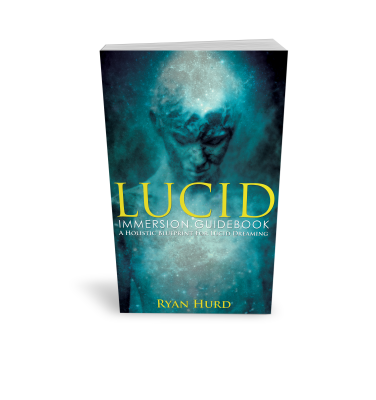 If you read this blog regularly, the power of combining practices shouldn’t come as a surprise, as I teach precisely that in my Lucid immersion guidebook. When you skillfully combine a (limited and carefully picked) number of techniques in a controlled lucid dreaming experiment, you learn quickly what works best for you.
It’s amazing that after thirty years of lucid dreaming research, we are still just beginning to clue into what works the best. But with this generation’s renewed interest in consciousness studies, and the applicability of lucid dreaming for neuroscience, I have a feeling that we won’t be in the dark for too much longer.
References:
La Marca, K. and Laberge, S. (2012). Pre-sleep treatment with galantamine increases the likelihood of lucid dreaming. Poster session, presented June 25, 2012 at the Annual conference for the International Association for the Study of Dreams, Berkeley, CA.
Stumbrys, T., Erlacher, D., Schadlich, M., and Schredl, M. (2012). Induction of lucid dreams: A systematic review of evidence. Consciousness and Cognition (21), 1456-1475.
I agree with this and get best results by using various methods and mixing them up. If I stick to one method it stops working very quickly and so variety is the key and this keeps it interesting as well.
Right – you got to keep it fresh! Otherwise the cognitive domestication sets back in.
Yes, mixing it up works best. I find that the rem-dreamer works best on it’s own, but galantamine/choline w/ WBTB is a sure bet as well.
It is amazing that all the studies and techniques themselves are missing a one crucial ingredient from lucid dream induction phase that will multiply anyone’s success rate: Enthusiasm, excitement.
Think about it: What did Tholey, LaBerge and others did when they were young? They immersed themselves totally to dream world. They did this also during days.
I’ll guarantee that anyone will have a lucid dream next night if you buzz with enjoyment anticipating nights adventures. If this is the only think you can think during the day “Oh, why can’t I go to sleep already?” and your heart is yearning to try any technique you will have success very soon.
The problem of course is to build this enthusiasm. When I was young it was easy to get totally excited and see multiple lucid dreams per night. I had nothing else to do but read about lucid dreaming and try different techniques during nights. It meant everything to become lucid during night.
Now I have work, family and I am usually tired and I have many other things to do and think that diverts my attention.
Enthusiasm like this is not easy to build any more. But I have learned over the years that the only think deciding my success is the enthusiasm I can bring in to it. The technique itself doesn’t event matter. Just use one that you get excited about 🙂
Funny thing is that all these lucid dream legends and teachers talk a lot about techniques but the enthusiasm that they showed themselves gets only cursory attention. There are after all a lot of emotional and mind techniques to get yourself energized and excited about what you set your mind in to.
I would like to see a study of enthusiasm and the success rate in lucid dreaming.
great point Ollie. enthusiasm is hard to measure, that’s probably one reason it’s not talked about. In another sense, enthusiasm is an important part of making a strong intention (which is another thing hard to measure). I can FEEL the days when I’m amped to explore the dream world. It’s in air, it’s electric. So I agree: immersion –like the early researchers were steeped in — is the way.
In Lucid Immersion Guidebook, I write more about picking techniques that jive with you precisely for this reason. You want to be excited about the trip… not doing terrible boring rote reality checks and what not.
thanks again for the excellent comment.
While I agree that the drug approach is very promising, I think that it might lessen the impact of any study using it to induce LD. If researchers are only looking for ways to make LD a more reliable and stable phenomenon it’s a good way, but a brain under the influence of any substance is never ideal for observing brain functions aimed for generalization.
Hey Ryan, thanks for another informative post on lucid dreaming techniques. MILD definitely has potential if a person knows how to utilize it right.
WBTB definitely is a huge factor in augmenting the chances of lucidity, especially when newcomers aren’t really proficient at recalling their dreams if they slept all the way through without a waking point.
I know that even though MILD only scored me a few lucids, it has increased my dreaming recall overall because I incorporated autosuggestion and such to wake up at specific times where my REM cycles would be prevalent.
Again, thanks for posting!
I would like to add raising the forearm technique by monroe :
http://www.sacred-texts.com/bos/bos186.htm
It combines wake-back to bed by mentioning doing it in the morning or after a nap and it’s dependent on the forearm and just forget yourself which is way more effective than trying to focus on methods and the forearm falling keeps one from falling asleep between mind-awake body asleep .
Interestingly , Einstein used to use a similar method in his thought experiments , A falling rock while he sat down and closed his eyes , Also there’s another person I it put a coin between his eyes for it fall each time he fell asleep , The concept behind it is hypnotic fractionation , Each time you wake up and re-enter trance , You fall into a deeper trance , Eventually you reach paralysis if you keep still or a deep state for remote viewing state like einstein would call them thought experiments .
Now , The method that is exactly like this without having to raise a forearm is the Timer +WBTB method (I learned it from Lucidology) , The idea is the exact same thing as the aid of a forearm or a rock or a coin , But least consciousness of them and it gives way better chance for waking up in trance several times via making the mind think it’s gonna wake at about 8 minutes coz it happened twice but instead the timer is set up on 16 , So a phantom wakeup of the mind only occurs and voila you’re in sleep paralysis .
I think that so far this is the most effective technique I’ve found , Because most of my own OOBEs came from the fore-arm raise method , And I stopped getting them when I started putting in more conscious techniques that made the sleeping process become harder, And this timer techique actually mimicks it in a WAY more effective and less conscious way for achieving more results , But I guess raising the forearm method would be better for a long term practice , While the timer method for a short-term intensive training type of practice .
The forearm technique I’ve posted above , And the timer technique is available for free along with a time software on lucidology , Hope that helps some people looking for something that works
A
@Olli
I totally agree that it could be very beneficial , Bas the good type of enthusiasm , If you know what I mean , I’ve had two experiences that show this .
My first OOBE ever got me WAYY too excited , I was dying for the next , And thus my enthusiasm made me so attached to get another , And this made me spend more than a week trying without any results , Until I let go , This is when it worked .
Another time after a long while of doing this , I was in love with a woman in a long distance relationship , And we both knew how to astral project and we were dying to meet eachother and so excited to meet , And that was one reason that made me LD more often at the time , Because I had a good reason to do it , And I did go to her once , tried to teleport another time but didn’t work , And finally I had a very real half-lucid dream where she waited for me and I met her , But she didn’t know when I told her about it.
Point is , Yeah definitely having a reason to go in there and being excited it about it is definitely a great motivator and more like gives you automatic intention to go there , But it’s only good if you don’t attach to it , And you let go.
I forgot to mention that the success rate of the timer method for the author is 80 % and upon practice is 99 % , And so many other people reported having their first LD or OOBE through it , I also had many oobes using the same concept behind it !