How to Keep a Dream Journal
July 30, 2009 by Ryan Hurd
Filed under Working with Dreams
This is the third post in my series about working with dreams without a dream dictionary. Today I’m focusing on dream journalling. Besides basic dream sharing, this is the easiest way to start remembering more dreams and working with them.
Everyone has their own way of keeping a dream journal, so of course the trick is to find what works for you. These tips below are what works best for me, not only the actual techniques but also the important attitudes to keep for success. Read more
Dream Sharing: the Foundation of Dream Work

July 29, 2009 by Ryan Hurd
Filed under Working with Dreams
This is my second article in the series 10 ways to work with your dreams. Over the next week or so, I’ll be rolling out my favorite ways to deepen the experience of the dream. The real foundation of working with dreams is getting them out of your memory and into the world. Keeping a dream journal is important, and could easily be the first post in this series, but I want to start with the historical, low-tech, and most widespread way of honoring your dreams: sharing them.
Dream sharing is ubiquitous across the world’s cultures and you can bet that dream sharing has been a standard human activity for as long as we have had the ability to: Read more
Dream Interpretation without a Dream Dictionary

July 28, 2009 by Ryan Hurd
Filed under Working with Dreams
Over the next week or so, I am going to cover my ten favorite ways of working with dreams without buying a dream dictionary.

The Oneirocritica by Artemidorus, probably the most modern dream dictionary you need. 2nd century A.D.
It’s not that I think dream dictionaries are useless. Actually I have one and consult it at least once a week. However, the dream dictionary can only provide one way of working with dreams, which is the cultural significance of a symbol or some pan-human experience such as shame, mortality, or stress. To put it mildly, our dreams are much more than the dumping grounds of our culture’s symbols and our fear of realizing we are butt-naked in public.
Dream ReLiving: An Advanced Lucid Dreaming Practice
July 22, 2009 by Ryan Hurd
Filed under Lucid Dreaming

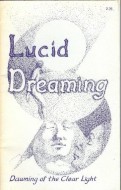
Sparrow's 1976 book on the spiritual dimensions of lucid dreaming
I’d like to share an advanced lucid dreaming technique taught by Scott Sparrow, a psychotherapist who played a major role in the beginning of the modern lucid dreaming movement. Dreams often give us gifts, but sometimes as lucid dreamers we ironically lose our lucidity about the value of the dream’s spontaneous gift. This technique is a powerful way to re-enter a lucid dream that you feel you made a “bad choice,” and wish to have another opportunity to meet the dream as it comes.
Calling Northern California Dreamers
For my readers in the San Francisco Bay Area, make note of a Dream Studies Open Forum this Friday June 24th, in Berkeley. Hosted at the Dream Institute, this gathering is open to the public and anyone interested in discussion and networking with dream workers and researchers. If time permits, we will have a round circle where dreamers can share the fruits of their most recent research and projects.
This is a great opportunity to see with your own eyes how many of us there are working towards radical change. Radical change, am I serious? Yes, I mean the intense work ahead of us to transform our dream-phobic society into a Dreaming Culture.
Managing Cancer Pain with Healing Dreams

July 20, 2009 by Ryan Hurd
Filed under New Dream Studies

Often the claim is made that dreams are healing. Usually, dream workers are talking about psychological healing, or the knack for dreams to highlight the areas in our lives that need attention, courage and renewal.
Are Dreams the Original Psychedelic?
July 7, 2009 by Lee Adams
Filed under Theories of Dreaming
I have spent the last 6 years of my free time from my normal job researching the similarities between dreams and psychedelic hallucinations. Many people from the psychedelic community would disagree, claiming that their experiences are unique.
Not surprisingly, the lucid dreaming community or even normal sleeper may claim either that their dreams are unique or that “I don’t do drugs!”


Twitter
Facebook