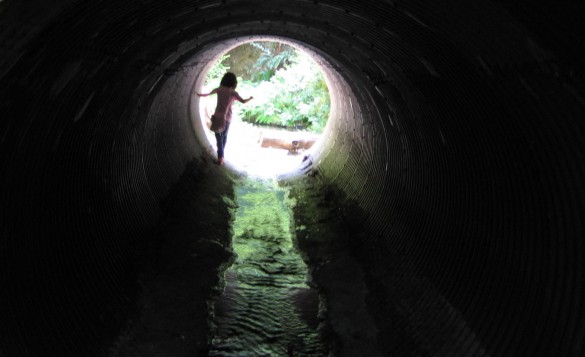
With Halloween on its way, it’s high time to take a look at visitation dreams, or dreams we have of the departed.
For hundreds of years, early November (conveniently poised between the Fall Equinox and the Winter Solstice) has been celebrated as a time of harvest and plenty, and also a time when the veil between the worlds of the living and the dead is thin. Is it the death of summer, the lengthening nights, or the dark knowledge that some won’t make it through the hard winter to follow?
Who can say, but the metaphor connecting the harvest and the dead is part of the myth of agricultural societies around the world, as disparate as the ancient Celtic cultures with their celebration of Samhain and the Mexican celebrations of the Day of the Dead.
Spirits and Dreams Go Way Back
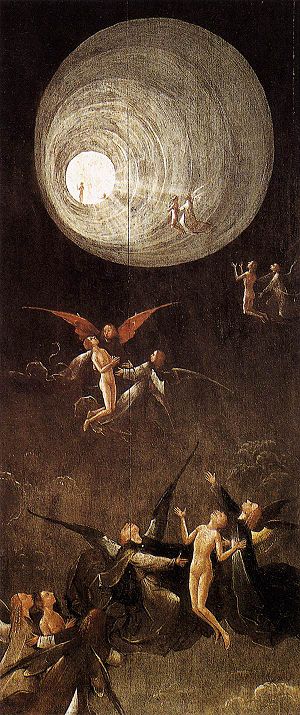 It’s no secret that a preferred method of contact with the departed in these bridging times is through dreams and hypnagogic visions. As writer Robert Moss has noted in The Dreamer’s Book of the Dead, the dead come calling for different reasons, and not all of them seem to be about satisfying the grief process, as some psychologists have wanly suggested.
In fact, dreams of the dead can differ wildly in content, emotional embrace, and timing. Perhaps something else — something a little more ancient – is at work.
Historically-speaking, dreams of the dead are some of the earliest transcribed accounts of dream life. Aristotle mentioned them, as did Lucretius, in part to comment on the widespread folk psychology that the characters in people’s dreams actually seem to be the spirits of the departed.
Don’t forget that in the ancient world Thanatos (God of the Dead) and Hypnos (God of Dreams) are brothers. I could go on to cite ancient China and Egypt, as well as hundreds of contemporary indigenous cultures, who also have made the link between dreams and ancestors, but suffice to say that dreams have always been noted as a natural place for the deceased to mingle with us.
Mythologically speaking, dreams take place in the underworld of our minds. Cognitively speaking, themes of mortality, depression, and sickness outnumber themes of happiness, bliss, and rapture in dreams 4 to 1. It would seem we are predisposed to go down the dark road when we dream –- in fact, one recent dream research study found that the longer a dream narrative is, the more negative in theme and emotional content it becomes. The road to the land of the dead is paved with strong emotions, both positive and negative.
But Aren’t Dreams Made of Cinnamon, Spice and Everything Nice?
I love to bring this point up, because our culture defends itself against the dark truths of dreaming cognition with the cheap belief that dreams are light & fluffy, random, and mostly about our mother’s sex appeal. And what to make of the Euro-American re-scripting of the very word “dream” to mean idle fantasy, wishes of kisses, and hopes of happiness?
But behind the strained smile of the newscaster’s sound bite, there is an uncomfortable silence. It is in this silence, before being laughed off as “what a crazy dream!” that the power of the dreaming mind takes hold.
Common Traits of Visitation Dreams
Meanwhile, ordinary people around the world continue to have visitation dreams that greatly affect them. Some say the dreams actually change their lives forever. According to Kevin Kovelant, a consciousness studies professor at JFK University, visitation dreams often have these features:
- The dream feels more real than the usual dream: more clarity, focus, and steadiness of mind.
- A “felt sense” that the person is really them, not just a memory. “That was grandma – I know it was her.”
- Very little plot: usually the dream narrative consists of the interaction between the dream ego and the figure of the deceased person.
- Strong emotions are commonly reported: love, forgiveness, anger, fear.
- A “physical” touch between the spirit and the dreamer, usually a hug or a reaching out.
- The deceased dream figure often looks younger and healthier than when they passed on.
- Sometimes accompanied by the feeling of “weight” or “presence” on the dreamer’s bed.
But Is it Really Them?
Of course, the question begged is whether or not the dream means something about life after death, especially after the dream visitation passes on information that the dreamer did not previously know and is later verified. These uncanny stories will never convince a skeptic… until the skeptic gets a knock on the dream door himself.
Kovelant, who is lecturing about visitation dreams on Halloween in Fremont, CA, recently related the following documented story:
In 1925, a North Carolina man awoke from a dream in which his late father — looking very much alive — instructed him to “find my will in my overcoat pocket.” Checking the pocket, the dreamer discovered a note leading him to a certain chapter in the family Bible. Between two pages in that chapter, the will was cached, according to 1927’s Proceedings of the Society for Psychical Research.
Kovelant also has noted that there has been little serious research into the actual phenomenon of visitation dreams. Rather, most publications use the subject to advance (or denigrate) a pet theory on the nature of the universe, such as the existence of an after-life, or of the possibility of soul travel.
More often than not, of course, is the cultural narrative that dreams of the dead are “part of the grieving process.” This perspective does have validity, of course: dreams of the recently passed can be very comforting to mourners. These bereavement dreams are surely a sub-set of what we largely clump together as “visitation dreams” today. However, sometimes the visitation dreams comes 20 to 30 years later….long past the traditional “stages of grief” have passed.
 Early in the 21st century, visitation dreams invite more questions than answers. And as the veil between worlds grows thin tonight, maybe you should prepare yourself for a visitation.
You won’t be alone.
This article is an excerpt from my ebook Big Dreams, Lucid Dreams and Borderlands of Consciousness (Dream Like a Boss Book 2) — which is currently out of print. Get notified when the book is rereleased!
Dreams do seem to be mainly about threatening situations. A Finnish scholar Antti Revonsuo has in fact put a theory about the issue called Threat Simulation Theory of dreams.
The main idea being that since people dream mainly of threatening situations there must be some explanation for this in our biological evolution. Maybe we practice threatening situations in dreams in order to cope with them better if we meet them while awake?
If you are interested I would recommend the following work for a lengthy introduction:
Threat Simulation- The Function of Dreaming? A dissertation study by Katja Valli (2008):
https://oa.doria.fi/handle/10024/42466?locale=len&author=
There is a downloadable pdf of the study in the page.
Anyway as Ryan stated the dead visitation dreams will never convince a skeptic about the after-life question. Too bad there are only anecdotal stories about encounters that bring new information for the dreamer. It is quite easy to make other explanations about how the dreamer got the information if there is no controlled study setting.
Self-respecting scholars won’t start this kind of studies because nothing worthwhile has been discovered on the studies done so far.
-Olli Erjanti
thanks for commenting Olli. I am a big fan of Katja and Antti’s work – I wrote a piece about their theory here.
Clearly, our ancestors are those who were good dreamers, but we are still missing the crucial mechanisms that account for how dreaming improves learning/memory.
But there are actually some excellent scientific studies that are peer reviewed and with statistically significant results that indicate that anomalous information does come through dreaming cognition. (Not this this directly answers the “life after death” question, of course). Check out Charles Tart’s “the End of Materialism” for a very readable review of the last 30 years of research into parapsychology. The truth about mainstream science treatment of anomalous psychology is that “a man hears what he wants to hear and disregards the rest.”
I found it very interesting that you would talk about the book “The Dreamers Book of the Dead” because I was just talking with a professor about dreams and she said I should read some of the writings from Robert Moss. It was kind of cool to see that come up on your site a few days after I looked up Robert Moss and his writings. At any rate, its something that always dumbfounded me why individuals dream of the after life or dead friends and family. I think your article helps further my understanding and has me asking more questions.
synchronicities like this is what dreamwork is all about Lee!
I dont know what to think my mom has passed away almost three years ago now and i loved her she was a abused wife all her life by my dad mental physical ect. I dream of her every now and then never good always she is a zombie she dies with her eyes open we forgot to bury her ect. I have only had one dream i was talking to her on the phone all others are terrible. she smells like rotten meat when i get close. I wish i knew what this is telling me. she was a good christian woman but always evil is what i dream could someone help me?
Sarah,
sorry I couldn’t respond sooner — I’ve been out of internet range for several weeks as I moved. Your dream is powerful and seems metaphorically to suggest that – if it were my dream – she has not been properly ‘dressed for burial.’ This could mean a number of things, including your own conflicting feelings that have not been put to rest and possibly family secrets that still moulder in the air and need to be seen and then disposed of properly. I don’t know your situation, but perhaps more ritual at the memorial garden or more prayers at night in which you call out the hardships she endured and thank her for her strength and honor her for her suffering. Many people have trouble with their own feelings while grieving, especially if on the face of things we’re supposed to be happy for those who have passed on because they are in a better place, so honoring your own feelings and giving yourself space to grieve, be angry or sad, and really touch the ground can be helpful for this long process. warmly, RH
thank you so much. i do believe what you said. our family is a very dysfunctional one . i am considered the only one that is sane in the family as my counselor has told me. my brother is a pedophial my sister is a compulsive liar as i am always the one that is lied about.my dad is a very sick man mentally and physically. he has cheated with women on my mom while she was living. yes i so believe what you said about her suffering and i sometimes feel angry that she let it happen to her and all of us and stayed with my dad. maybe i am also angry at her for this. i dreampt the other night she was in a room on a be laid her body and on a couch she also sat. i left the room to get something or do something and when i came back there she sat on the couch dead with her eyes open on me. then i had a more pleasant dream of her she and i were sitting with our feet in this clear running water it was warm on our feet. i think i thought it would somehow heal her cancer but not sure but it was a more calming dream. i am sure another bad one will come soon as it always does. my mom was cremated and my sister took her ashes so i will pray like you advised and hopefully this will help me. i do not see any of my family as they always back bite me in some way. thank you so so so much for caring. may god bless you in many ways. sarah
Sarah,
that second dream offers a clue for a meditation to help cleanse away the “foul-smelling” dreams. Clear running water. Next time you pray, or whenever you want to give your mom positive attention, focus on that clear running stream. Imagine the water, how it feels, running over your feet and her feet. Imagine it washing away all the negativity, hurt, and pain. It’s still important, of course, to let yourself feel your pain and anger, but it seems to me that this imagery is what your dream unconscious has suggested for cleansing the hurt when you are ready.
take care, Ryan
hi again ryan again another disturbing dream. i drempt i was lookin in a drawer and found 2 silver dollars the date on the was 1984 then suddenly my heart ached for her. i cried and cried so hard just like it was the day it happened. i then took the coins to a shop where this man was a sheriff from the western days he said they were worthsss seven dollars and fifty cents now. a man came in and stole one of them. then i went down to a room where people were watching a westren show my mom was a actactor in the movie. then i relized she again was passed on and i cried and cried again so hard. today i am carring this sadness with me do dpepressed feeling over everything. god how can i get tbhese dreams to stop.? i am so tierd of these terrible dreams. i have tired counsling ect nothing is helping any ideas i juat dont know if maybe my mom is telling me something and wont let go
Hi Sarah,
I’m sorry to hear how you’re suffering. If this were my dream, even though the dreams are painful, I’d think it is good sign I am now grieving in the dream itself. Emotional dreams that are so transparent can have a cathartic effect — in other words, these dreams are moving through a grieving process… a painfully slow one. Also, if it were my dream, I’d notice how once again how male figures are “taking” from my relationship with my mother — a critical voice that says “This isn’t valuable!” and another who steals the coins altogether. Even though Mom is gone, the dreams reveal energies and patterns that are still present.
Therapists who work with dreams in your area may help: not all therapists do work with dreams, so shop around and ask this upfront. Many are available for a small fee or on a sliding scale. Also there may be dream groups in you area (see this list for regional contacts for the International Association for the Study of Dreams:
http://www.asdreams.org/idxmembership_contacts.htm
Because this is so personal, I also invite you to contact me privately by email to continue the discussion: http://dreamstudies.org/about/
I am so glad to have found this site. It verifies and matches the visitation dreams I’ve had. My partner passed away in September 2009. I’ve had only 2 visitation dreams from him, one about a month after he passed away, the other about 6 months after he passed away. The first one occurred in the kitchen of the house I was staying in, the last one was in the bed I was sleeping in while it happened. In both dreams I could literally feel his skin like it was in real life. In the first one we just hugged, I said I was so happy to see him and that was it. The second one, I was lying on my side in bed when suddenly I felt arms around me. I turned over and he was lying there, smiling at me. I said to him “I can actually feel your arms around me!” And he just smiled so widely at me. He looked so happy, and just the same as he did before he passed away. (It was sudden so he was healthy before he passed). We just hugged and said I love you. I said to him “will you wait for me?” and he said “of course I will”. Then I felt him “pulling away”, saying he had to go. I didn’t want him to but he left and then the dream ended. I woke up remembering it all very clearly. It was quite a simple, quick dream, but meant so much to me. I pray every night to have another.
I have had 3 dreams of my late ex fieance. 1st one the day after he died.. N this dream I was on the phone fighting with his sister and then I hung up and he called me asking me what was going on. And I was trying to explain to him, and he said hold on I’ll be right there. Well I looked around this room I was in.. A white kinda dim lit room and then I seen him pull up and when I open the door I just grabbed him and hugged him. I could feel him and smell him. And I remember everything he had on. But he was talking to me but he was just smiling and his mouth wasn’t moving but I could hear him.. He told me sry for everything and he said other things to me. But he was really sry and so I hugged him again and he said he had to go bc “she” was waiting for him.. Idk who she was if it was his new gf or what?? But then my latest dream I had was when I got to this place I told myself, ok u know when u find him u gotta ask him some questions and u can’t forget. So I went around this corner of this building and there he was working on something n back of a truck… So I stopped and just stood there and he looked up and smiled and said, “hey! U made it back” and I told him before I wake up I need to ask u a few things.. And he said ok. And I asked him if he still loved me. And he smiles and said yes I do. And then I asked him how is it where u are and he said that he was a little bored and I kinda looked at him like huh?? And he smirked and said I know right? And I remember asking these questions so fast bc I wanted to get them all out before I work up. So my last question was when am I gonna be with u again? And he said a month and a day of the week ( which I am not saying) and then he started to talk about this watch n this magazine. And explaining it and I was thinking to myself… Y r u talking about a stupid watch don’t u know we have limited time before I wake up? And I inturruped him and said is this real or am I n a dream!? And he laughed at me again and said.. U see this watch??? When u see this watch on this certain page ( he gave me a number) that will be ur sign… Then I just looked at him for a sec then I felt my self waking up.. Now I don’t know if I’m crazy bc he ment a great deal to me. Or if this is real. There’s more details on things but i just kinda gave u the run down on it. But most stories i read are the spirits coming to u not you going to them…
That was what I thought every time I visited my grandpa. Every single time we are outside. Walking and talking. Usually during a hard time in my life. Maybe we are going to each other? I am a Christian, so I know he is in heaven. I don’t think where we meet is exactly heaven but a lot closer than where we are right now. I do know this the colors are far more vivid, the breeze dries every tear before it could be seen, it’s so peaceful and pure love and understanding. There is a place there in my dream that others who are alive go to meet their loved ones that are also deceased. It is definitely heavenly. I would rather stay there then come back here. It’s always accepting, loving, complete peace and comforting to be there. I could talk about it forever. There are so many things that people who have had a visitation remember. You don’t remember a dream in detail usually forever. I haven’t forgotten one detail. Except our conversation. I don’t remember that in detail. I have had a handful of these dreams. Mostly about my papaw. The others we’re my mamas. The last one I had I thought to myself I shouldn’t be able to do this. I was immediately sucked back into my body, and have never had another dream or visitation of either of them. I am very sad about that. I pray that in the future I will once again be allowed to visit them.
One thing that I did find odd, we weren’t really allowed to hug or to give each other a kiss on the cheek. However, we could hold hands. Also we didn’t have to open our mouths to talk. It was all thought, like telepathy. No sadness or grief, pain anything bad did not exist there. From the second you open your eyes there tears would actually evaporate immediately and all those feelings were gone.
U know everytime the thought of giving him a kiss I didn’t, like something n some way put it n me not to. I just could hug him… Strange. I’m still waiting for this sign tho lol
U know everytime the thought of giving him a kiss I didn’t, like something n some way put it n me not to. I just could hug him…
fascinating. Well, if it were my dream, I’d definitely have a hard time forgetting the date he said, but this doesn’t necessarily mean it’s your D-Day. often, in dreams, death is a symbol for rebirth, or the death of a part of us that must change. It’s sort of like the Mayan calender 2012 conspiracy — is it the end of the world.. or the beginning? The date could also correspond to your own greiving process, dunno. In any case, I recommend not taking it too literally, but keep an eye on that watch. 🙂
I was hired to help a family clean and prepare a room so their father could come home to die. The father, whom I never met, was in the hospital and Hospice would not allow him to be brought home due to the condition of his home. He and his wife are, were, hoarders. So, the daughters and I spent all day doing back breaking work tearing out carpets and making the areas clean and clear as instructed by Hospice. They paid me and I left. I didn’t tell the family but I really hurt myself while working and was in a lot of pain. I pulled nails out of his bedroom floor for 6 hours. For the next two days I was shrilling in pain everywhere I went. On the third night I had also gotten food poisioning. I was in bed suffering so much. Then that night I was asleep but felt like I woke up. A man I have never seen was standing in my door with a box of tissues. I was screaming bloody murder because their was a man in my room. I was even cusing at him! He walked right over to my bed, right at my head. He never said a word. He just smiled at me and tried to hand me this box of tissues. I reached out and touched him because he was right at my head. Then in a moment he was gone. I didn’t put two and two together until a couple of days later the daughter called to tell me that her father had passed. It just so happened that it was on the same night that a man came in my room. I didn’t want to tell her. I am still thinking – how could this man, who never met me, know where I lived, who I am, or that I was hurt. Could this really have been the man who passed? I may never know. It’s never happened again.
I have had a number of very vivid dreams over the years, some where of warnings and some comforting..I recently had one that was so powerful that I can’t shake it. Not that I really want to..Between my 2 daughters they have had a 5 miscarriages ..All of my children live out of state.. so I usually visit 2 times a year..the last visit was where I had this dream..it was the 2nd nite there and I was so exhausted from traveling..and went and laid down in my grandson’s bed as he was spending the nite at his Aunt and Uncle’s house..The dream begins..I am in the the Ocean( I have a intense fear of water over my head) and I’m sitting on a surfboard and the water is so vividly blue and warm as I sit on the surfboard, I’m looking up at the clear blue sky, and I’m pushing my feet back and forth in the water..I feel so peaceful..also my health is not good..but I feel so physically strong and alive..as I look around I notice all these dark haired little boys laughing and splashing around in the water..I feel such Joy watching them play and start to laugh along with them and they call me Grandma and starting encouraging me to join them..which I do..it seemed we played in the Ocean for a long time and I was so overjoyed and happy as were they..and then I woke up..and just laid there for a moment without opening my eyes in amazement of this dream..when I felt a pair of little arms reach around my neck and hug me..and I hear a little boys voice say : I love you so much grandma” and I hugged him back and said I love you too..and then slowly opened my eyes and thought my grandson must have come home ..I got up and went looking for him..only to be told that he wasn’t coming home until later that day.Now I feel like this was a visitation dream..I still cry when thinking of it…I feel like they are waiting for me..am I reading to much into this..it is such a strong feeling in me..Thank you
what a beautiful gift of a dream. I don’t think you’re reading too much into it at all.. the depth of feeling doesn’t need translation, only honoring! And you are doing exactly that by attending to your grandchildren on this side of the veil. Keep that one close to your heart, and know you can bring it out whenever you feel doubt and uncertainty in this world.
As a student at the College of Metaphysics, I leraend a lot during the preparation of National Dream Hotlineae, however, I had no idea what it was preparing me for. One of the assignments as a class for NDH was to send PSA’s and emails to newspapers, radio stations and online resources in a specific region of the United States. I had the southeast region which consisted of twelve states. To begin this assignment it was recommended to choose the largest city in the region. I chose Jacksonville, Florida because it is the U.S.’s largest city in the southeast region. I spoke about my search in the kitchen and Dr. Barbara overheard the conversation. She shared with me that I was missing a significant part of my search. She asked me, What about the surrounding areas? This hadn’t even crossed my mind because I had only included the residents that lived specifically in Jacksonville. She told me to go back to my search and this time include the metro areas. To my surprise when I included the metro areas of the three chosen cities I received a much greater perspective of the area. Miami, Florida with 5,547,051 people according to the U.S. Census Bureau is the largest city by population in the southeast region. This is a 4,725,267 difference than the population of Jacksonville. That’s a BIG difference! This was the first time I really understood what identifies an area. I saw it’s individual parts and pieces that make up the city as a whole as it was broken down by Wikipedia. This viewpoint is important for any field director that is looking to open a school center in a selected city. Dr. Barbara brought this point to my awareness as I awed over the magnitude of how much a difference it made when I included the metro areas. Thank God for the people who have come before us to aid us in making better choices. I now have a much more expansive idea of what consists within a city’s limits, a much greater appreciation for taking the time to broaden my search and the capacity of my thinking. Walter Hrycaj []
Hi, congrats for this website 🙂
I’m also very curious about dreams, but today I had 3 very unusual, searched a lot on google but haven’t found anything like that… The dreams were with dead people but people I don’t know, and think they don’t exist but in the dream they were somewhat distant related. For some reason I needed to understand something so I requested to have access to a dead related (that doesn’t exist, I think) then they bring to my home the dead woman to pass the weekend (because it was friday it would have to be that way) and before they go away living the dead with me, they spray the face of the dead and the dead wakes up for 2 days, just for the time she would be at my home, I saw her eyes opening. After I had one other dream with an uncle of my ex-boyfriend (I never heard of that uncle, think he doesn’t exist) that was also dead but was at the moment “alive” and speaking with me telling stories from his chilhood playing with my ex. He also would be alive only temporarly and nobody else could know the deads could be alive again for some time (like zombies but with normal appearence). The dream after those was someone (undefined) had to put paper for recycling but I already did that, so he/she was in panic but I remebered I had more paper for recycling, so I said: don’t worry, I have some more paper so you can recycle… I have the idea that this is related with the others, cause recycling paper is somewhat like dead paper going for a new live? Very strange and I’m so so so curious. (My ex-boyfriend died 4 years ago but I didn’t see him only that unexistent uncle…)
Today I had one other strange experience, I was starting to wake up with the alarm ringging, already conscious I opened my eyes and saw a person near my bed looking (nobody else was at home, only me) I jumped with the shock and the person disapeared… I was awake, but ok, awakening but even so, I wasn’t on a dream unless we can bring dreams to real life when we wake up? But I wasn’t dreaming, I was earing the alarm and thinking that I must get up, very strange… what could have happened?
sounds like what is called a “hypnagogic hallucination” — basically its dream imagery projected into waking life, it happens at the boundary of sleep and waking up. Here’s more about this fascination type of imagery –http://dreamstudies.org/2010/12/10/hypnagogic-dreams-and-imagery/
I am glad to find this site. I am a 29 years old male, Indonesian. As a medical doctor I always have a rational-scientific mind and always believed that ALL dreams were just random memories, hopes and fears pop up together in our sleep. Until last week.
Last week my sister, Galuh, 23, passed away in a violent traffic accident. We were very close, she was my only sibling, our mother died one day after she delivered Galuh and our father died in 2004. She was all I had in this world and my grief is overwhelming.
She had a boyfriend through the internet who live on different continent. She always refered him as her soulmate. She loved him very much and planned to visit him next month. The three month with him was the happiest time in her life. But I did not know about him and never had any communication with him. I wanted to inform him about her death but did not know how.
The night after her funeral I had a dream of her as a young teenage girl. She was so beautiful, smiled at me and showed me her desk calendar. Kissed my cheek and I woke up. I thought it was another ordinary dream. The following night I had the same dream again. This time she grabbed my hand and led me to her desk and showed me her desk calendar. I woke up and immediately went upstair to her room and had a look on her desk calendar. Inside it I found a piece of paper with her soulmate’s email addresses on it.
My sister wanted me to inform her soulmate on her death by visiting me in my dreams.
I had a relationship many years ago with a man that I loved very much, but he became violent and dangerous toward me. We broke up, but occasionally I would see his daughter who I cared a lot about. Well, my ex died of liver disease in Nov. 14, 2012 and since then I have become very close to his daughter. She said that he always loved me and felt badly about our relationship. One month ago, his daughter moved to a new apartment. It turned out to be my exact apartment (in a very large complex). Anyway, I dreamt last night that I visited a house with lots of windows and he was sitting in the window. He looked very happy and hugged me and he told me that he was good, not to worry and he’d be waiting for me to come. I was so happy when I woke up as I feel that he’s healed in afterlife, and our negative relationship is mended. It was also strange because last night was the 3 month anniversary of his passing. What do you think this dream means? Thank you.
I dream of my childhood best friend often. Her mother passed away only weeks before her. In the first dream, my friend did not know she died. She was young, childlike. Her mother was there also & told me to comfort her daughter, she was confused. Her mother also told me not to tell her daughter she died. I was asked to convince her to leave her sons belongings & go with her mother. They went off together on the beach holding hands. Since then my friend visits without her mother. The dreams are always lucid. In the dreams she knows she is dead, it’s as though she has a curfew & always tells me she has to go. I never wake up before she leaves. I have questioned myself as to wether or not its my imagination. But these dreams are like no other.
Please give insight…I dreamed with my dead best friend/boyfriend, he held me and comforted me I begged him to stay or take me with him at that moment I could feel my children over my shoulder their spirit saying we need you.. The deceased told me no to either option just call on me when you need or want me and I’ll be here immediately……he kneeled on the ground and so did I while weeping like a little girl with my head on his lap while he caressed my head I shortly fell asleep…..so real and beautiful please give insights
My ex died last Sept in a motorcycle accident. Prior to his passing I dreamt of his deceased mother and he was there but he would not speak he just smiled. The day he died he came to me that night twice but I was too scared so he gave up and walked away. At this time i was pregnant with another mans child but my ex and i cared alot for one another still as we’d both moved on. Two nights ago I dreamt of him and in talking to him he asked what did he do so bad in his life that “they” wanted him to die…as he says this he is crying as I am too…I reach for him but wake up. There are soo many other things that have happened. I thought I was at peace but now I don’t know what it all means. thanks all for listening.
Hi Erica, thanks for sharing your heart-rending dreams about your loved one who has passed. Grief works through us in waves, it’s not a straight path. These dreams can stir up the trouble, but rest assured they are healthy and helpful. I recommend writing the dreams down, it can create some psychological distance, and over time you can discern some patterns about what is said, and also about when they come. take care.
My twin brother passed away a few years ago from a heart attack at the age off 44. We as brothers have and had a rocky past of drug use and recovery but were always trying to be better. In my dream i was in bed with my girlfriend. I was in and out of being awake and deep sleep. Meaning i couldnt move and i was awake. Then i was dreaming i was in bed with my girlfriend in our house when my brother came back. He walked in and handed me a gun and said it was loaded and i got a little mad about it. then went to take a shower. I looked at the gun and checked if it was loaded. It wasnt. I went to the room where i could hear the shower running. The lights were not working. I then went to the sbower and opened the door an he was there. His skin was tan in color and he looked great and i could see his tattos but his face was fuzzy. I just on impulse grabned him and hugged him and hugged him. He really didnt hug me back and he was crying a little like he was sorry. Then i woke up. It was a very real experience.
i have been dreaming of my daughter who passed in 09 she was 15 but in my dreams she is like 8..i dont know why
My husband died when our girls were young, he was also in his early 20’s. A few years after his death I took our girls to visit his family for a week. While I was there I had a dream of him, he was evil looking and was on top of me, I couldnt move. He told me he was going to take his girls. I woke up terrified. I left my girls there, strict rules. Not real sure what to do. The next day my daughter drove her grandmas car in a ditch with her grandma in the passenger seat, a fence post went through the floor board behind my daughter. My other daughter almost drown in a river. This dream has always haunted me. Is this coincidence?
I had a dream of my Ex fiancé over 6 months ago. …which I will explain in a moment.
My Ex knew I was married and as a Christian man respected my boundaries, however, he would always like to test me when he was alive. He would ask to meet him at certain places to catch up. I had never seen him anytime after I got married even though I wanted to, I just never took him on his friendly offers. The last offer however, there was a voice in my head saying to me….”this will be the last time” I didn’t want to disrespect my husband or myself for that matter. My EX and I were young lovers and we just were so infatuated with each other at one point long ago…however, with young….scary love…comes the inevitable break up.
Fast Forward 11 years later, I find that he passed 6 months from the last time we spoke. It was the most powerful pain in my heart.
A few days later I got a visitation dream. In this dream: I see Nick healthy and happy. When he locked eyes on me from what had to be 10 feet away we both smiled. Like a childhood smile…..Suddenly I became 5 feet away…..I cant tell you how we communicated but we expressed our love for each other. In the dream I could see him but couldn’t hear a word. I just felt every communication through emotions. We wanted to hug each other, but there was reservations since I was married. In the next moment we were right next to each other…..I looked at him in awe, he looked at me like he missed me very badly. We hugged for what seemed like a minute. In that minute I felt very peaceful, released of all pain, stress or worry didn’t matter anymore. After that one minute was over we detached and poof the dream was over. I woke up full of piece and happiness, just a knowingness that my ex was still around and thriving. I had to look around cause for a few seconds I literally expected to see my EX boyfriend in my room. AS out there this dream seams, It has been to this day not only my most vivid dream but my most emotional one as well!
Hi Ryan,
I found your website about dreaming of the dead. I’ve seen random people who have pasted on many times right when have past, but this dream I had the other night was alot different than other dreams. It’s a dream about my best friend that I had as a child we were very close as child and as we got older we each did our different things but also talked via facebook. Well 3 yrs ago she passed away in an accident. I have never had dreams about her before. The other night I was surprised that I dreamt of her sitting on a park bench in a park. I went up to her shocked that I was able to see her and as she looked before her accident. She smiled and said that she is ok and she misses her parents but she is with her grandparent. Then she told me “They will be born April 9th don’t worry.” Which was her birthday. and just like that she disappeared and I was in the park alone. I currently have no children and I have been trying to conceive for the past 3 yrs and going thru fertility treatment. Is this truly a message from the other side or my conscience playing with me.
Hey Meghan, I have found that either/or judgments don’t do us any favors when evaluating these sorts of encounters. Sometimes verbal exchanges can be healing, but other times they can spill confusing information. There’s no way to know except in retrospect. Mark that date, but don’t count on it. The emotional truth of the dream may be more important in the long run — a dream, if it were my own dream, that is comforting about the death process just as I am trying to bring new life into this world.
Okay I get the whole dreaming of someone u know and when they’ve passed having them visit u in dreams. I have had that many times and I suppose I’m used to it. My great gran, great grandfather, my fathers mom, my grans best friends daughter and other family have visited me in dreams so I kind of take what their message is and do what I need to with it. But… What about dreaming of someone u have never met? 5 years ago I used to dream of this guy. I guess he was “evil”. He had that demonic kind of sense to him. And look I’m christian like 100 percent but at that time I was a little lost. Long story short I never saw him again til the other night. It was crazy to say the least. He died and then came back to life and for some odd reason I jumped ontop of him to see if it was really him while he was lying on the floor. It was really him. He didn’t look as evil as before. There wasn’t as much death around him. He looked like an ordinary man. The dream got weirder and I was suddenly at a buffet when someone said something to me which this mystery man didn’t appreciate. Suddenly there was a fight that broke out and things got blurry until the mystery man was with me again and stared into my eyes like he could see my soul. In the dreams I had all those years ago, he and I were somehow in love(or at least he said we were). I never understood much of what he said. But now, all these years later. He was sweeter, kinder, more.. Human if that’s the right word. He touched me and I could feel my heart beat faster. It all felt so real and when I woke up I was almost dizzy I was so confused. If anything I just wanted to go back to my dream. It felt more real. So I haven’t seen him again. I haven’t met anyone who looks even remotely like him. Am I crazy? As I’m typing this I’m seeing how crazy it is.. I kind of wish I dream of him again just to see him look at me that way again. To feel my heart go a hundred miles an hour. I realize I’m probably sounding crazy. But if anyone has any insight, hey I’m all ears.
My grandmother passed away a few years ago. About a week ago I had a dream that I’m in a house that in real life I don’t recognize but it doesn’t feel foreign in the dream. The house has light-colored hardwood floors and there is a stairway across from the foyer. There is a tall brown-haired man in his late 30s/early 40s with me but I don’t know who he is or what our relationship is supposed to be. In the dream I know who he is and he feels familiar. Suddenly I hear a knock at the front door, which is painted white and has a similar design as this door (http://www.historichouseparts.com/Images2/VED062411-09.JPG). The bottom is wood and the top is glass with wood outlining squares. As a result, you can see the through the top portion glass. When I hear the knock, I turn and look at the door and immediately recognize that it’s my grandmother. I exclaim, “Oh my god, that’s my dead grandmother. Am I hallucinating? Am I seeing this, right?” I turn to the man and say “Do you see her too? Tell me she’s really here.” And he says, “I see her too. She’s really here.”
I run to the door and open it and she’s standing there, smiling with a blue dress on with white on it. She looks like my grandmother did about 20 years ago. It’s her just in her late 60s/early 70s. She’s heavier than she was when she died very frail (as she was 20 years ago) and was able to stand without any problems and without the usage of a wheelchair (which she was able to do 20 years ago). There may have been someone with her – standing behind her and a bit in the distance but I don’t know who this person is and I didn’t acknowledge them in the dream.
I hug her as soon as I open the door. We embrace. It feels wonderful. I can touch her and the embrace was a feeling so overwhelming that it brings me to tears thinking about it. I tell her, “I can’t believe you’re here! How are you here?” And she just smiles. We have a conversation that I can’t remember and she hands me a book. I look down at the book (I cannot recall what book this is or if it had a title) and when I look back up again to her – she’s gone. Disappeared into thin air.
I wake up and immediately remember this dream and freak out because it was extremely vivid and real. It’s been over a week and it’s still extremely vivid and real and actually brought me to tears while writing this. I haven’t cried about my grandmother in years. I’m not a crier. My grandmother’s spirit came to me in a dream and I’ve never been so sure of something in my life.
thank you for sharing your dream. What a blessing! I wonder how the significance of the book will make itself known in the weeks and years to follow. dreams like this can resonate over a lifetime.
Yeah visitation dreams aren’t just for healing, I can say that now for sure!
The 10 year anniversary of our first
time was two days ago and my
loved one came to me this morning
before dawn in a dream to show
me he’s still in love with me too
I expected to see the little bruise
on my throat in the mirror from
the experience it was that real
So on the fourth of july my grandmother committed suicide which in a way is ironic since she was the biggest Christian I’ve ever known. But for the past 2 nights I’ve had the same dream, I’m reading on my bed by my window that looks to the backyard when I hear a strange laugh from outside. I go to check it out, As I step from the back door my head peeks around the corner and I see her standing there laughing and saying nonsense what sounded honestly like a mentally deficient person which I think might be related to the fact that she shot herself in the head, such a strong sense of Fear, Confusion, Awestruck, But I know without a shadow of a doubt it’s her. My words trip over each other as I struggle to say my younger sisters name who’s in the room connected to the back door then I wake up. Someone help me make sense of this.
I just had a dream of my mother and grandmother who are both deceased. They were helping me move. I cannot remember everything in the dream but the end. My grandmother was talking to my mother and she made my mother laugh. As my grandmother left the room my mother said to her she was her favorite person. I thought this was odd because they were in-laws and did not get along in this life. I ask my Mom why she said that and she replied that she (grandmother)was in a good mood today and she wanted to enjoy her company.My mom in the dream was acting like she was scolding me because I interrupted them. I never dreamed about them both only my Mom ever so often. I also found it alarming because it was Halloween. Please interpret this for me someone.
Hi
I am 27. My mother passed 3 years ago. That time I was studying and I was not in town when her health deteriorated. Somewhere now too I have the guilt feeling like If I would have been there with her in the last days, may be things would have been better. Right now I am living with my dad and brother. My dad is also not well these days and brother is younger, trying to settle down. I wont say I can manage things well, but yes I dont cry/or become helpless in front of others. I know I have to take care of things. Since my mother passed I had 3 dreams of her. I am writing to you because I have followed the same pattern in the 1st and 3rd dream. I am unable to understand the same. I consulted my dad, he said they might be trying to send you some message. But this does not make things better.
One dream was like when my mother came into my dream, I had the understanding that she is dead. But i hugged her and it was like no one understands me as you do. And the dream did had quite healing effect on me. Those days I was quite disturbed too and practically since my mother died I did not hug anybody, as I was not able to share my grief.
The other 2 dreams. In both the dreams, it was like I came from some distant place, I dont see my mother. We know she has been out for treatment. But we generally dont visit her too often. I go to visit her and take her back to our home(yes in both the dreams I believe and see her as alive). We are good in financial condition. But the place where she is kept is not very good. When I visit her, she does not recall me as her daughter. In the first dream of the too she seemed weak and mentally ill and the place was too dark like an old mental hospital. And my mother was not happy there, but she refused to remember me and was not willing to come back. The other dream I saw yesterday night and it was similar. But the place a bit better. But my mother seemed happy there. She was wearing a school dress and appeared younger and she did not recognize me there. Both the dreams stop when I see her. She appears indifferent in her own world.
I do not know if this does carry some message. Please help me understanding the same. Thank you.
Hi Ryan, I am so glad I came across this. Hoping you still reply here. .. Well I know. I had my first visitation dream from my grandma who raised me. It was so real I am still in tears. Just wondering if you can help me understand the message. I dont deal good with grieving. My dad passed away when I was 15 and I found him dead and I always just blocked it out. My grandma passed almost 2 years ago and I do the same… so in my dream I was at my house talking to my neighbor and I turn my head and theres my grandma shes sitting wearing a red robe facing the wall. I than. ask my neighbor if she sees her and she says yes. well my grandma gets up and is walking toward me and I keep moving back in fear toward the hall, she keeps coming and is right in my face and I finally can open my eyes.I wake up crying. … what I dont understand is why was I scared? why didnt she hug me?she always wore a blue robe, what does red mean? My daughter was wearing all red last night. my neighbor and I talk about getting pregnant together n a few months. Is it a sign I shouldn’t bc it was a fearful dream?
I’ve had a dream about somebody from the 70’S, a small boy about 3 years old, wearing overall shorts, with black little tie up boots, I don’t know who I is, or why they came to me, but it was in my great uncles home, whom is deceased..
Hello Ryan, Last night I had a dream that I was visiting my best friends mother because she was sick, (she has recently been treated for breast cancer). When turning around to leave the room her husband who passed away 10 years ago was standing right in front of me, he was always like a father figure to me and I thought very highly of him. He was dressed exactly like I remember him but he looked younger than he was when he passed. He hugged me and I woke up. I am trying to figure out why he came to me? His wife had a very hard time dealing with his death and still to this day cannot speak his name without crying. They were a wonderful loving couple, very best friends and very good people. I want to tell her about this dream as I really think he was telling me to let her know he is ok. I have had many dreams where dead people are in my dreams but I cannot communicate with them, this is the first time I actually had contact with someone.